
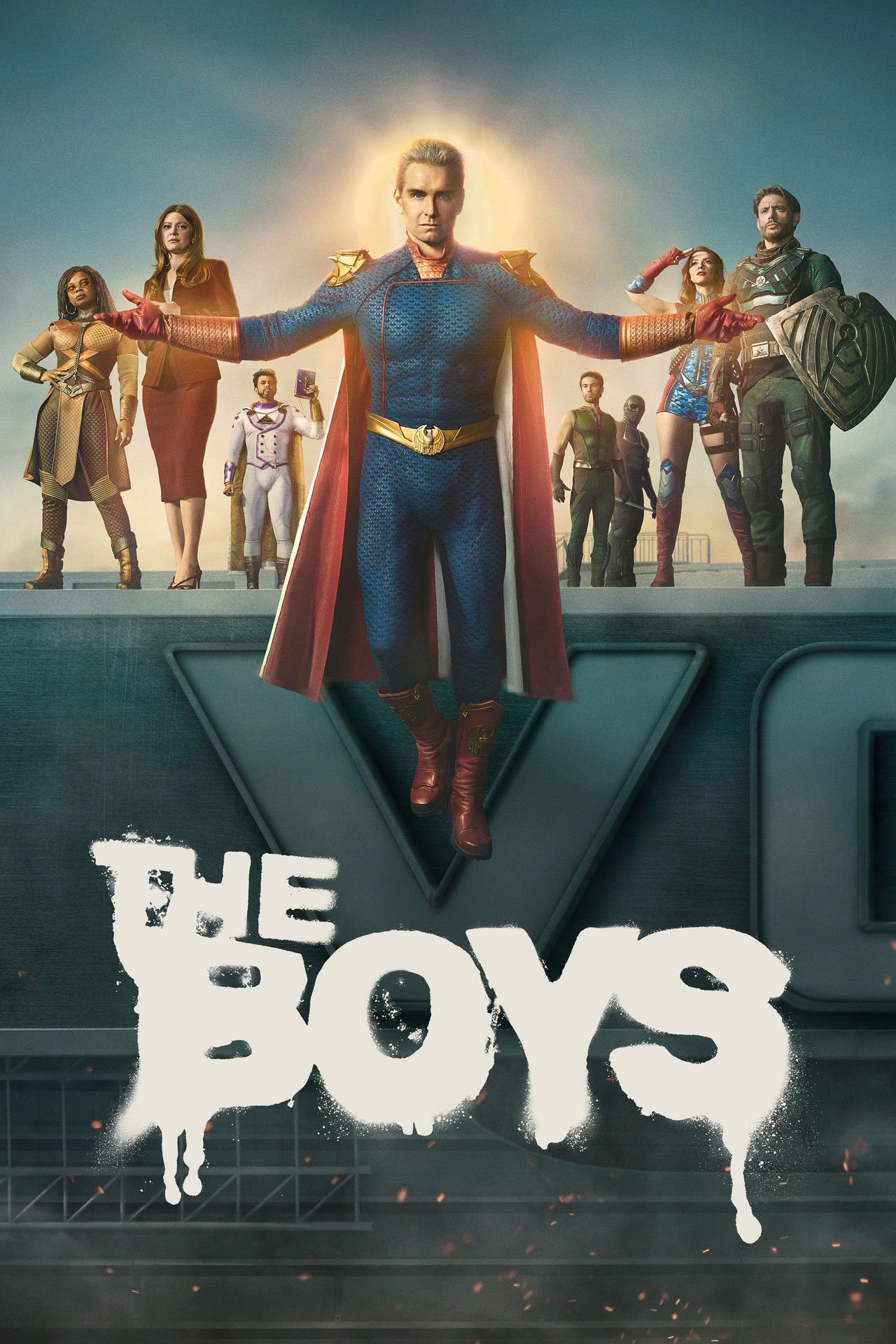
Movies Like X: The Boys
| Title | The Boys |
| Type | Tv |
| Release Date | 2019-07-25 |
| Genres | Sci-Fi & Fantasy, Action & Adventure |
| Studio/Network | Prime Video |
| Director/Creator | Creator: Eric Kripke |
| TMDb Rating | 8.4/10 (11869 votes) |
| Where to Watch | Amazon Prime Video, Amazon Prime Video with Ads |
Looking for movies like The Boys? These ten films deliver corrupt superheroes, satirical takedowns of power, and the same cynical energy that made Prime Video’s hit series an 8.4-rated phenomenon.
There’s a particular satisfaction in watching Homelander’s smile crack—that unnerving, all-American grin hiding something monstrous behind it. When Eric Kripke adapted Garth Ennis’s comic for Prime Video in 2019, he didn’t just make another cape show. He built a mirror, held it up to our celebrity-obsessed culture, and smashed it with a crowbar. I remember watching the pilot for the first time, mouth slightly open, thinking: they’re actually going there. Every episode since has doubled down on that promise. After burning through each season, I found myself hunting for films that carry that same bitter electricity—the refusal to worship at the altar of superhuman power. Here are ten that get close.
Why Fans Love The Boys
What hooks people isn’t simply the gore—though Karl Urban’s Billy Butcher certainly delivers on that front with relish. It’s the audacity of the thing. Jack Quaid’s Hughie represents every fan who ever looked up at a hero and felt painfully small, while Antony Starr’s Homelander embodies every quiet fear about unchecked authority hiding behind a press-friendly face. The show works because it understands that superpowers without accountability are just tyranny with better marketing. Erin Moriarty’s Starlight navigating the corporate horror of Vought International feels disturbingly plausible—compromise dressed up as opportunity. Jessie T. Usher’s A-Train reducing someone to red mist isn’t played for empty spectacle; it’s an indictment wrapped in speed-force effects. That specific mixture of satire, genuine emotional stakes, and the willingness to make you squirm? That’s the DNA we’re tracking across these recommendations. When people search for the boys season 5 or obsess over every detail of the boys cast, they’re chasing that feeling—the dangerous thrill of watching heroes who have no business being called heroes.
1. Watchmen (2009)
Zack Snyder’s adaptation of Alan Moore’s graphic novel is the granddaddy of superhero deconstruction. Where the series asks who polices the heroes, Watchmen asks what happens when costumed figures become indistinguishable from the broken systems they ostensibly serve. The Comedian alone feels like a rough blueprint for every morally bankrupt supe in Kripke’s universe—a man who sees the joke and laughs anyway. Snyder’s visual maximalism polarizes audiences (the love-it-or-loathe-it camp divide remains fierce), but the film’s commitment to its bleak thesis—that power corrupts absolutely and nostalgia is a weapon—makes it essential viewing for anyone craving more institutional rot and moral ambiguity.
2. Brightburn (2019)
What if Superman landed in Kansas and turned out to be evil? That premise drives Brightburn, and it delivers the concept with uncomfortable efficiency. The film shares the show’s core suspicion of superhuman power, but strips away the satirical framework for pure horror. Watching a child discover they can shrug off bullets and then decide what that freedom means is genuinely unsettling—the kind of queasy tension that crawls under your skin and stays. It’s a tighter, nastier experience than what you’ll find across the boys episodes—less ensemble, more concentrated nightmare. The third act loses some control, sacrificing psychological dread for more conventional carnage, but the central idea haunts you long after credits roll.
3. Kick-Ass (2010)
Before Kripke’s vision made cynical superhero content mainstream, Kick-Ass was already asking why ordinary citizens don’t simply put on masks and fight crime. The answer, Matthew Vaughn’s film cheerfully demonstrates, is that they get beaten half to death. The picture shares the satirical impulse—superheroes as an absurd concept taken to logical extremes—but wraps it in a more playful, candy-colored aesthetic. Hit-Girl’s introduction alone, with its profane carnage and cherry-red wig, feels like a spiritual ancestor to the mayhem Butcher’s crew unleashes on Vought’s assets. Just don’t expect sustained darkness; Vaughn winks at you between punches, keeping one foot in comic-book wish fulfillment even as the other stomps on genre conventions.
4. Super (2010)
James Gunn directed this deeply uncomfortable character study about a man (Rainn Wilson) who becomes a vigilante after his wife leaves him for a drug dealer. Where the show has Vought’s corporate machine, Super has one guy with a pipe wrench and divine visions that might just be brain damage. It’s the most unflinching entry on this list regarding the actual physical consequences of DIY heroism—every hit looks like it hurts, every victory costs something real and measurable. Ellen Page’s sidekick character brings a disturbing enthusiasm for violence that rivals any supe’s sociopathy, grinning through brutality with chilling delight. A tough watch, certainly, but an honest one that refuses to romanticize its protagonist’s delusions.
📖 Related: Check out The Boys: An Unbelievable, Ultimate Superhero TV Experience
5. The Suicide Squad (2021)
Gunn’s other foray into anti-hero territory, this time with Warner Bros. backing and permission to kill characters whenever the story demands it. The opening beach sequence alone establishes that nobody is safe—a promise it keeps with shocking regularity—echoing the same willingness to dispatch anyone for maximum dramatic effect. The key difference is warmth: Gunn genuinely loves these misfits, whereas Kripke seems to relish punishing his. But if you want colorful sociopaths on a mission with genuine emotional stakes buried under gallons of viscera and unexpectedly tender character beats, this delivers spectacularly. Idris Elba’s Bloodsport carries a paternal arc that sneaks up on you between explosions.
6. Joker (2019)
Todd Phillips’ controversial origin story shares the show’s deep distrust of institutions and its fascination with what creates monsters in the first place. Arthur Fleck’s descent isn’t played for satire—it’s tragedy, raw and aching. But the underlying question mirrors what Kripke’s series asks repeatedly: who failed this person? What systems produced this breakdown? Joaquin Phoenix’s performance is a gaunt, twitching rebuke to every sanitized villain origin story Hollywood has ever sold. The film sometimes mistakes grimness for depth, and its class-warfare themes operate as blunt instruments rather than surgical critiques. Still, its central thesis—that society’s discarded people can become its most dangerous—lands with considerable force.
7. V for Vendetta (2005)
A single vigilante taking on a corrupt government using theatrical violence and propaganda? V’s crusade against Britain’s fascist regime parallels Butcher’s war against Vought, though rendered with more poetry and fewer exploding heads. The Wachowskis’ script (adapting Moore’s other masterpiece) leans heavily into political allegory, sometimes to a fault—speeches occasionally substitute for drama. Natalie Portman’s Evey undergoes a radicalization that mirrors Hughie’s journey in microcosm: both discover that fighting monsters requires becoming something uncomfortable, something you might not recognize. Less visceral than what Prime Video offers weekly, more intellectual in its framework, but driven by the same fury at institutional corruption hiding behind patriotic symbols.
8. Akira (1988)
Katsuhiro Otomo’s anime landmark isn’t a superhero film in the Western cape-and-cowl sense, but its themes are identical: what happens when power outpaces every system designed to contain it? Tetsuo’s psychic awakening and subsequent loss of control is essentially the Homelander arc stripped of corporate branding and pushed toward cosmic horror. Neo-Tokyo’s military and government agencies scrambling to weaponize or suppress him mirrors Vought’s approach to managing supes—control the asset, bury the collateral damage, maintain the narrative. The animation remains staggering thirty-five years later; every frame pulses with a furious, hand-drawn energy that CG still can’t replicate. Required viewing for understanding why Japanese storytellers arrived at these themes decades before Hollywood dared touch them.
9. Mystery Men (1999)
The oddball on this list, and I mean that affectionately. Before superhero cinema became a relentless industrial complex, this ensemble comedy asked what happens when second-rate heroes attempt to save the day with abilities ranging from invisibility (only when nobody’s looking) to hurling forks. The humor is gentler than the barbed-wire wit Kripke deploys, but the satire cuts in similar directions: Casanova Frankenstein’s schemes and Champion City’s hero-worship feel like a gentrified Vought prototype. Ben Stiller, William H. Macy, and Janeane Garofalo play misfits whose earnestness is both the joke and the point. It bombed commercially in 1999, but its skepticism about hero culture was years ahead of its time.
10. Unbreakable (2000)
M. Night Shyamalan’s quiet superhero picture operates on the opposite frequency—where the series screams, Shyamalan whispers. But both share a refusal to accept superpowers at face value, insisting that extraordinary ability demands extraordinary examination. Bruce Willis’s David Dunn slowly discovering his abilities, and Samuel L. Jackson’s Elijah Price explaining why such abilities matter, creates a tension that’s philosophical rather than visceral. The revelation of what Price actually orchestrated recontextualizes everything preceding it, much like peeling back Vought’s corporate veneer recontextualizes every heroic act. If you want the deconstruction without the bloodshed, this remains a masterful subversion. Shyamalan’s later work diluted the concept across sequels, but the original stands as proof that superhero stories can unsettle without a single drop of blood.
More Dark Superhero Picks Like The Boys
Defendor (2009) — Woody Harrelson plays a mentally ill man who believes he’s a superhero patrolling the streets at night. It shares Super’s uncomfortable realism but with more tenderness threaded through its rough fabric. Harrelson’s performance is devastating precisely because he plays Arthur with such unprotected sincerity.
Hancock (2008) — A superhero who drinks on the job, causes catastrophic collateral damage, and openly resents the people he’s supposed to save. The first half is a sharper satire than popular memory suggests; the second half loses its nerve entirely, pivoting toward mythology when it should have doubled down on character. Still, Will Smith’s anti-hero remains an interesting prototype.
Chronicle (2012) — Three teenagers gain telekinetic powers and immediately begin misusing them with escalating consequences. The found-footage format constrains some sequences, but the Seattle needle-drop scene captures exactly the terrifying exhilaration the show channels through its younger supes discovering what they can do—and what they can get away with.
📰 More From Watchlist Wizard
Frequently Asked Questions
Is The Boys season 5 confirmed?
Yes. Prime Video officially confirmed that season 5 will serve as the show’s final season. Eric Kripke has stated he always envisioned a specific endpoint for the story, and this renewal ensures the narrative reaches its planned conclusion rather than stretching indefinitely.
What episode of The Boys did Dan Trachtenberg direct?
Dan Trachtenberg directed the pilot episode, which established the entire visual and tonal template for the series. That opening hour set the show’s willingness to shock while grounding its violence in genuine character stakes—a delicate balance every subsequent director has had to maintain.
What is the main plot of The Boys?
The series follows a vigilante group informally known as “The Boys,” led by Billy Butcher, as they attempt to expose and dismantle Vought International—the powerful corporation managing a stable of corrupt superheroes called The Seven. Their conflict pits blue-collar determination and willingness to fight dirty against superhuman power and corporate influence.
Is The Boys season 5 coming out in 2026?
No official release date has been announced. Given typical production timelines for a series operating at this scale and complexity, a 2025 or 2026 premiere window seems plausible, but neither Prime Video nor the production team has confirmed specific dates for the boys season 5 release schedule.
Ready to watch The Boys?
Check out our complete streaming guide to find out where you can watch it right now.