
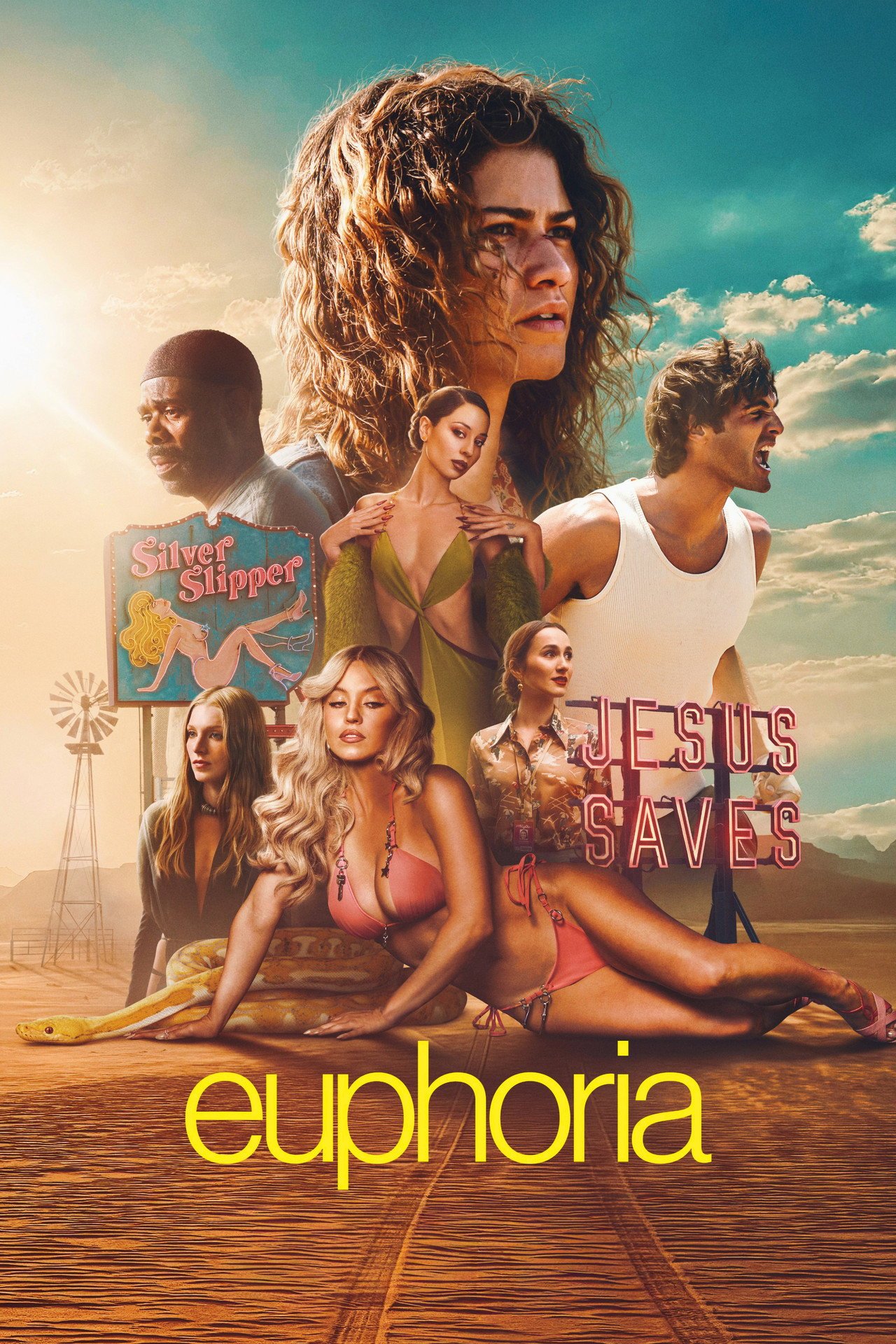
Series Info
| Title | Euphoria |
| Type | TV Show |
| Release Date | 2019-06-16 |
| Genre | Drama |
| Runtime | 3 Seasons, 24 Episodes |
| Studio / Network | HBO |
| Main Cast | Zendaya, Hunter Schafer, Sydney Sweeney, Jacob Elordi |
| TMDB Rating | 8.3 / 10 |
| Where to Watch | HBO Max, HBO Max Amazon Channel, Spectrum On Demand |
Quick Verdict
Yes — if you can handle brutal honesty about adolescence. Euphoria is visually spectacular television that earns every ounce of its hype, even when it stumbles.
I wasn’t ready for Euphoria. Nobody was. When HBO dropped the pilot in June 2019, the conversation around teen television split cleanly down the middle — either this was exploitative garbage masquerading as art, or it was the most fearless show to hit screens in a decade. Having watched all three seasons (yes, including those devastating bridge episodes), I land somewhere more complicated. Euphoria is messy, sometimes self-indulgent, occasionally borderline irresponsible with its subject matter. And yet? I keep coming back. I keep thinking about Rue’s face in that doorway. About the glitter. About the silence.
Overview Of Euphoria
Created for HBO and centered on a group of high school students navigating addiction, identity, trauma, and the minefield of modern social media, Euphoria arrived with zero interest in playing safe. Zendaya leads the cast as Rue Bennett, a recovering addict whose narration guides us through the chaos — though “guides” feels too tidy for what her voice actually does. She pulls you under. Hunter Schafer plays Jules, Rue’s love interest and emotional anchor, with a vulnerability that makes every scene between them feel dangerously real. Sydney Sweeney and Jacob Elordi round out the core ensemble, both delivering performances that launched their careers into the stratosphere for good reason.
Currently sitting at a 8.3/10 rating and trending across global charts, the show has become a cultural touchstone — the kind of series that spawns think pieces, Halloween costumes, and heated dinner-table arguments. Three seasons, 24 episodes, and an unflinching commitment to showing adolescence as it actually feels: terrifying, euphoric, and unbearably lonely.
My Take on Euphoria
Episode one hooked me, but episode three broke me. That’s when I realized Euphoria wasn’t interested in shock value for its own sake — there was a pulse underneath the neon and the glitter and the drug use. Rue’s monologue about what addiction feels like from the inside? I had to pause. Walk around my apartment. Sit with it.
The show has this uncanny ability to make you feel like you’re intruding on something private. Watching Jules and Rue together, especially in those Season 1 late-night scenes, I kept thinking: this is what it actually feels like to be seventeen and desperate for someone to see you. Not the cleaned-up network version. The real thing — awkward, overwhelming, way too intense for your own good.
And the bridge episodes? “Trouble Don’t Last Always” and “F*ck Anyone Who’s Not a Sea Blob” stripped away every visual excess and left two actors alone with dialogue that cut to bone. That’s when I knew the creators had actual chops, not just a big budget and a color wheel.
What Euphoria Gets Right (And Wrong)
Let’s start with the obvious: visually, this show operates on a level most television never touches. But that strength is also its biggest weakness.
Cinematography & Visual Style
Every frame looks like it was painted by someone who grew up on music videos and decided to get a psychology degree. The color grading alone — those saturated pinks, blues, and golds — creates a dream-logic that makes the horror feel mythical rather than mundane. That party sequence in the pilot? The way the camera drifts through different social orbits like a ghost? Chef’s kiss. No notes.
Where it stumbles: sometimes the aesthetic drowns the emotion. Season 2’s opening sequence — you know the one — is visually stunning but circles the drain of meaning for so long that the impact dilutes. There’s a fine line between “this is a mood” and “this is a screensaver,” and Euphoria doesn’t always know which side it’s on.
Acting Performances
Zendaya’s work here is transformative. Full stop. She plays Rue with this haunted stillness that makes every flicker of emotion feel seismic — you can see her calculating whether to lie before the words even leave her mouth. Hunter Schafer matches her beat for beat, bringing an openness to Jules that makes you ache. Sydney Sweeney as Cassie turned what could have been a one-note “tragic blonde” into something genuinely devastating. Her crying scenes aren’t just technically impressive; they’re emotionally annihilating.
The downside: some supporting characters get shortchanged. Nate’s arc, particularly in Season 2, feels like it’s written in circles — Elordi does phenomenal work with material that keeps resetting his character’s growth. It’s frustrating to watch an actor this good stuck in narrative quicksand.
Pacing & Story Structure
Season 1 is tight. Propulsive. Every episode builds tension with precision. Season 2? Bloated. Certain storylines needed trimming — the show became so enamored with its own atmosphere that momentum suffered. That midseason stretch where multiple episodes felt like they could’ve been condensed into one? Rough. The bridge episodes proved the creators can do restrained; I wish they’d remembered that more often.
Season 3 course-corrects somewhat, but the damage to overall pacing lingers. Twenty-four episodes across three seasons, and you feel every minute of that runtime — sometimes in a good way, sometimes not.
Soundtrack & Atmosphere
Labrinth’s score is its own character. Those swelling synths, the gospel undertones, the way music swells and cuts at precisely the right moment — it elevates scenes that would otherwise feel melodramatic into something transcendent. The use of original songs as diegetic performance pieces is a stroke of genius. When the characters perform, the show transforms into something mythological.
One thing that didn’t land: the licensed track choices occasionally feel like playlist curation over storytelling. There’s a difference between “this song sounds cool” and “this song means something to this character,” and Euphoria blurs that line more than it should.
Why Euphoria Stands Out From Similar TV Shows
Teen television has always existed in this weird space between exploitation and genuine empathy. Skins captured the chaotic energy of British youth with handheld cameras and zero gloss — it felt like someone snuck a camcorder into a house party. 13 Reasons Why attempted similar thematic territory but kept tripping over its own earnestness, becoming a public service announcement that forgot how to be compelling television. My So-Called Life remains the gold standard for adolescent emotional truth, though its 1994 sensibility feels like a different universe.
Euphoria splits the difference and then throws the formula out entirely. It has Skins’ willingness to go dark, 13 Reasons’ thematic ambition, and My So-Called Life’s emotional specificity — but wrapped in a visual language that belongs only to itself. The show treats its teenage characters as fully realized adults trapped in developing bodies, which is how adolescence actually works. They’re not wise. They’re not simple. They’re contradictory messes making terrible decisions with absolute conviction, and the show refuses to condescend to them.
That refusal is what sets it apart. Most teen shows either sanitize or sensationalize. Euphoria does neither — it simply presents, with all the beauty and ugliness that implies.
Is Euphoria a Good Starting Point? (Viewing Guide)
If you’re new to prestige teen drama, this is actually a solid entry point — with one major caveat. You need emotional stamina. Euphoria doesn’t ease you in; the pilot throws you directly into the deep end with content that would be a season finale for most shows.
Give it three episodes. If Rue’s narration hasn’t clicked for you by then, it won’t. The show establishes its rhythm early and sticks to it stubbornly. No prior viewing required — this is original storytelling, not a sequel or spin-off. Start from episode one, watch in order, and absolutely do not skip the bridge episodes between seasons. They’re essential.
Also: watch with subtitles. The sound design is layered, and Zendaya’s mumbled delivery is intentional — you’ll catch nuances you’d otherwise miss.
Is Euphoria Worth Watching?
Yes — if you can stomach brutal depictions of addiction, trauma, and adolescent cruelty. This is not comfort television. It’s not something you half-watch while scrolling your phone. Euphoria demands your full attention and emotional investment, and it rewards both generously.
No — if you’re sensitive to on-screen substance abuse, sexual content involving teenagers (even when portrayed by adult actors), or prolonged depictions of mental health crises. The show doesn’t pull punches, and sometimes that’s exactly what you don’t need.
Who Should Watch (And Who Should Skip)
Watch if you:
- Appreciate visual storytelling that pushes boundaries
- Want teen characters written with actual psychological depth
- Enjoy shows that provoke conversation and debate
- Value acting performances that feel lived-in rather than performed
- Like soundtracks that become part of the narrative fabric
Skip if you:
- Are currently struggling with substance abuse recovery (the depiction can be triggering)
- Prefer tightly plotted stories over atmospheric character studies
- Find stylized violence or sexual content uncomfortable
- Want something uplifting — Euphoria is many things, but it is never that
- Expect consistent pacing across all seasons
Final Verdict
Euphoria is the kind of show that makes you feel like you’ve been holding your breath for eight hours. It’s flawed — sometimes frustratingly so — but those flaws exist because it’s reaching for something most television doesn’t even attempt. When it connects, there’s nothing else like it on any screen anywhere.
The visual artistry alone would make it worth a watch. The acting elevates it into must-see territory. And the emotional honesty? That’s what keeps you up at 2 AM, staring at the ceiling, thinking about a fictional teenager and wondering why her pain feels so familiar.
Euphoria doesn’t just show you adolescence — it makes you remember yours. All of it. The parts you tried to forget included.
Frequently Asked Questions
Is Euphoria finished?
Not yet. HBO has confirmed Season 3 is in development, though production has faced delays. The story is ongoing.
Is Euphoria worth watching in 2026?
Absolutely. Its exploration of social media, addiction, and identity feels more relevant with each passing year. The visual craft alone makes it essential viewing.
How many episodes does Euphoria have?
Across three seasons, there are 24 episodes total, including two special bridge episodes between Seasons 1 and 2 that focus on individual characters.
Is Euphoria better than Skins?
Different beasts entirely. Euphoria has superior cinematography and deeper psychological excavation, but Skins captured a rawer, messier adolescence with less stylization. Both are valid — Euphoria just has bigger ambitions.
Ready to watch Euphoria?
Check out our complete streaming guide to find out where you can watch it right now.