
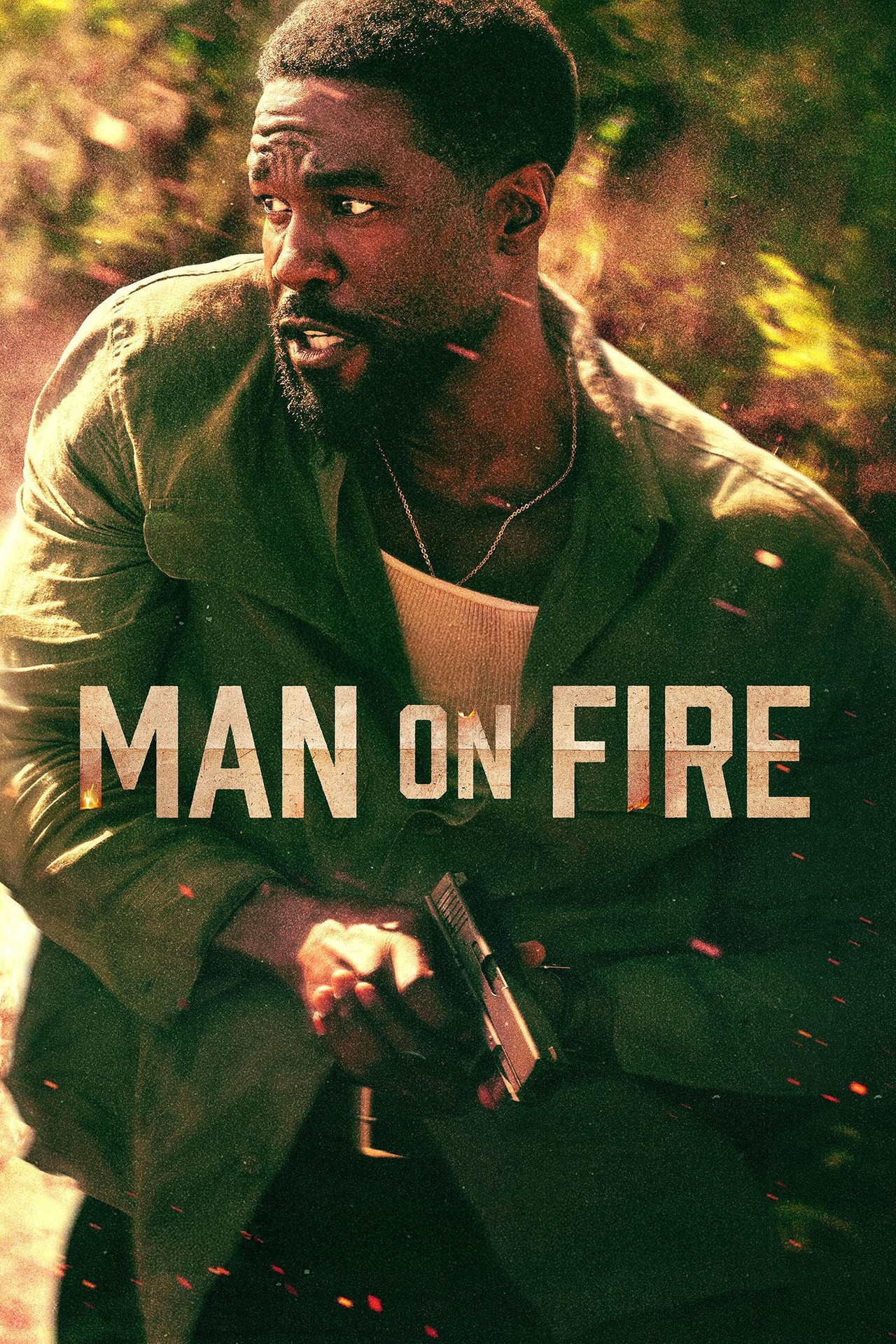
Series Info
| Title | Man on Fire |
| Type | TV Show |
| Release Date | 2026-04-30 |
| Genre | Action & Adventure, Crime |
| Runtime | 1 Seasons, 7 Episodes |
| Studio / Network | Netflix |
| Main Cast | Yahya Abdul-Mateen II, Billie Boullet, Scoot McNairy, Alice Braga |
| TMDB Rating | 5.4 / 10 |
Quick Verdict
Yes — but with caveats. Man on Fire delivers visceral action and a magnetic lead performance, even when its pacing tests your patience.
Overview Of Man on Fire
Netflix dropped Man on Fire on April 30, 2026, and almost immediately the conversation split down the middle. Some called it a gripping return to lean, mean action storytelling. Others walked away frustrated, and honestly, I get both reactions.
Currently sitting at a 5.4/10 rating and trending across global charts, the series follows a Special Forces veteran—played by Yahya Abdul-Mateen II—haunted by his past and hunted by his enemies, fighting to keep a teenage girl alive on the deadly streets of Rio de Janeiro. Billie Boullet plays the girl. Scoot McNairy and Alice Braga round out the principal cast, bringing weight to roles that could’ve felt disposable in lesser hands.
Seven episodes. One season. A stripped-down premise that doesn’t waste time explaining itself. That economy is both the show’s greatest asset and its biggest liability.
My Take on Man on Fire
I pressed play on episode 1 with modest expectations. The 2004 Denzel Washington film lives rent-free in my head, and the idea of a TV adaptation felt unnecessary at best. By the end of that first hour, I wasn’t converted—but I was curious enough to keep going.
Episode 3 changed everything for me. There’s a sequence on the rooftops of a favela where Abdul-Mateen II’s character, Creasy, is trying to move the girl through hostile territory. No dialogue for nearly four minutes. Just the sound of distant traffic, breathing, and the camera slowly tightening on his face as he calculates risk. That moment told me the showrunners understood tension isn’t about explosions—it’s about restraint.
I binge-watched the remaining episodes that same night. Not because the plot demanded it, but because the atmosphere had gotten under my skin. Rio at night, captured with an almost documentary grit, becomes a character itself. The humidity, the neon bleeding into puddles, the constant hum of danger around every corner—this is world-building through texture rather than exposition.
One moment that stuck with me happens late in the season, during a quiet scene between Creasy and the girl in a safehouse. She asks him something simple, and his silence says more than any monologue could. Abdul-Mateen II does more with stillness than most actors do with pages of dialogue. That restraint carries the show through its weaker stretches.
What Man on Fire Gets Right (And Wrong)
Let’s not pretend this is a flawless production. It isn’t. But what works, works remarkably well.
Cinematography & Visual Style
The camera work here deserves serious praise. Handheld shots during action sequences feel immediate without inducing nausea. Wide establishing shots of Rio’s hillsides, crowded with colorful buildings stacked on top of each other, give you an immediate sense of place. The color grading leans warm—amber, burnt orange, deep reds—which suits both the location and the subject matter.
A standout visual choice: the show frequently frames Creasy as a small figure against massive urban landscapes. He’s dwarfed by the city, outnumbered, outgunned. That compositional decision reinforces the thematic undercurrent without ever stating it aloud. Smart, efficient filmmaking.
Where the visuals stumble is in the night scenes. Several episodes feature sequences so dimly lit I had to adjust my TV settings. Mood matters, but if I can’t read the action, mood becomes irrelevant. Episode 5 suffers from this particularly badly—there’s an extended chase that should’ve been thrilling, and I genuinely couldn’t follow the geography of the scene.
Acting Performances
Yahya Abdul-Mateen II carries this production on his shoulders. His Creasy is a man running on fumes and muscle memory, someone whose trauma isn’t performed through showy breakdowns but through a persistent emptiness behind his eyes. Watch how he holds a cup of coffee in episode 2—both hands wrapped around it like he’s trying to feel something, anything. That’s not in the script. That’s an actor making a choice.
Billie Boullet, as the teenage girl at the center of the story, holds her own against far more experienced actors. Her performance avoids the annoying precociousness that child roles often fall into. She’s scared, resourceful, and occasionally irritating in the way real teenagers are. That authenticity matters.
Alice Braga brings gravitas to a role that the plot doesn’t fully serve. She does excellent work with limited material—her character could’ve been expanded without bloating the narrative. Scoot McNairy, reliable as always, delivers a performance that feels like it belongs in a different (and possibly better) show. His subplot needed either more room or a sharper focus.
Pacing & Story Structure
Here’s where Man on Fire loses people. The first two episodes move deliberately—some might say slowly. The show takes its time establishing Creasy’s psychological state, the dynamic with the girl, and the specific dangers of Rio. That patience pays dividends later when the action escalates and you actually care about what happens.
But episode 4 stalls badly. A mid-season detour involving McNairy’s character adds information that could’ve been woven into other episodes more efficiently. I found myself checking the runtime, never a good sign. The show recovers in episodes 5 through 7, but that middle sag is real and worth acknowledging.
The season finale lands with genuine emotional force. Without spoiling specifics, the climax ties together character and action in a way that feels earned rather than obligatory. I sat in silence for a good minute after the credits rolled, which doesn’t happen often.
Soundtrack & Atmosphere
The score leans heavy on Brazilian instrumentation—berimbau, pandeiro, subtle electronic textures woven beneath traditional sounds. It works beautifully, grounding the show in its setting while avoiding the trap of tourist-board exoticism. The music never tells you how to feel; it creates an environment where feeling becomes inevitable.
Silence is used as effectively as sound. Several key scenes drop the music entirely, letting ambient noise carry the emotional weight. The effect is unsettling in the best way. You’re placed inside Creasy’s hypervigilant awareness, hearing threats that might not exist.
Less successful is a recurring melodic theme that pops up during emotional beats. By episode 6, I’d heard it enough times that it had crossed from evocative to manipulative. Sometimes restraint means knowing when a motif has worn out its welcome.
Why Man on Fire Stands Out From Similar TV Shows
Action thrillers set in foreign cities aren’t exactly rare. What separates Man on Fire from the pack is its commitment to emotional consequence over spectacle.
Compare it to The Bourne Identity franchise, which shares the amnesiac-soldier-on-the-run DNA. Bourne moves like a machine—efficient, relentless, largely emotionless. Creasy isn’t that. He’s a man who feels everything and wishes he didn’t. The violence here costs something. Every bullet fired leaves a mark on the shooter, not just the target.
Reacher, another obvious comparison point, goes the opposite direction. That show embraces its pulp roots with winking humor and bone-crunching satisfaction. Man on Fire has almost no humor. The grimness might alienate viewers looking for escapism, but it gives the story a weight that Reacher deliberately avoids.
The closer kin, tonally, is The Night Manager. Both shows invest heavily in atmosphere, both feature damaged protagonists navigating morally gray terrain, and both understand that the most compelling action emerges from character rather than choreography. Where The Night Manager leans into espionage intrigue, Man on Fire strips the premise down to something more primal: one person trying to keep another person alive.
That simplicity is deceptive. Within that framework, the show explores trust, trauma, and the limits of protection. The relationship between Creasy and the girl isn’t sentimental—it’s negotiated, tested, and repeatedly questioned. That complexity elevates the material above standard action fare.
Is Man on Fire a Good Starting Point? (Viewing Guide)
No prior viewing required. The 2004 film and the original A.J. Quinnell novel share DNA with this adaptation, but the TV series operates as its own entity. You don’t need to have seen Tony Scott’s version or read the book.
Here’s my practical advice: give it three episodes. The first hour sets the table. The second deepens the dynamic. The third confirms whether the show’s rhythm works for you. If episode 3’s rooftop sequence doesn’t land, the rest probably won’t either.
Budget roughly 5–6 hours for the full season. Each episode runs between 45 and 55 minutes. It’s a manageable commitment, though that mid-season dip in episode 4 might test your resolve. Push through. The back half rewards your patience.
Watch with subtitles on. The mix sometimes buries dialogue beneath environmental noise, and several scenes include untranslated Portuguese that adds texture even if you catch only fragments.
Is Man on Fire Worth Watching?
Yes — if you’re drawn to atmospheric, character-first action with emotional stakes. The 5.4 rating reflects legitimate pacing issues and a dimly lit episode 5, not a fundamental failure of storytelling.
No — if you need constant momentum or satisfying violence without psychological weight. This isn’t that kind of show, and it doesn’t want to be.
The gap between the critical score and the audience conversation tells me Man on Fire is one of those titles that resonates more deeply with engaged viewers than with casual ones. It asks something of you. Whether you’re willing to give it is a personal call.
Who Should Watch (And Who Should Skip)
Watch if you:
- Appreciate slow-burn thrillers that prioritize character over set pieces
- Enjoy performances where actors communicate through silence and gesture
- Want action with emotional consequences, not just spectacle
- Found Reacher too lightweight and wanted something grittier
- Love location-driven storytelling where the setting shapes the narrative
Skip if you:
- Get frustrated by shows that take three episodes to find their footing
- Need consistent pacing without mid-season lulls
- Prefer your action heroes quippy and emotionally uncomplicated
- Can’t stand dimly lit night scenes that obscure the action
- Want a complete, wrapped-up story with no loose threads
Final Verdict
Man on Fire is a show I respect more than I loved in the moment—and one that’s grown on me significantly since finishing it. The flaws are real: that episode 4 sag, the underlit action, a supporting character who deserved better writing. None of that erases what Yahya Abdul-Mateen II accomplishes with this role, or the genuine tension the show builds when it trusts its audience enough to stay quiet.
In a streaming landscape crowded with content that mistakes volume for impact, Man on Fire dares to be spare. That’s not always satisfying in the watching, but it lingers in the remembering. Sometimes the quietest shows shout the loudest after the credits roll.
If you’ve got five hours and the patience for a thriller that earns its punches rather than throwing them cheap, hit play. Just keep your remote handy for that brightness toggle on episode 5.
Frequently Asked Questions
Is Man on Fire finished?
Season 1 is complete with 7 episodes. Netflix hasn’t confirmed a second season yet, but the story leaves room for continuation.
Is Man on Fire worth watching in 2026?
If you enjoy gritty, character-driven action thrillers set against vivid locations, absolutely. The 5.4 rating undersells the show’s strengths, though it does have real flaws.
How many episodes does Man on Fire have?
One season with 7 episodes, each roughly 45–55 minutes. It’s a quick binge if you commit to a weekend.
Is Man on Fire better than Reacher?
Different beasts. Reacher is popcorn fun; Man on Fire aims for emotional weight and atmosphere. I prefer Reacher’s consistency, but Man on Fire reaches higher when it connects.
Ready to watch Man on Fire?
Check out our complete streaming guide to find out where you can watch it right now.