
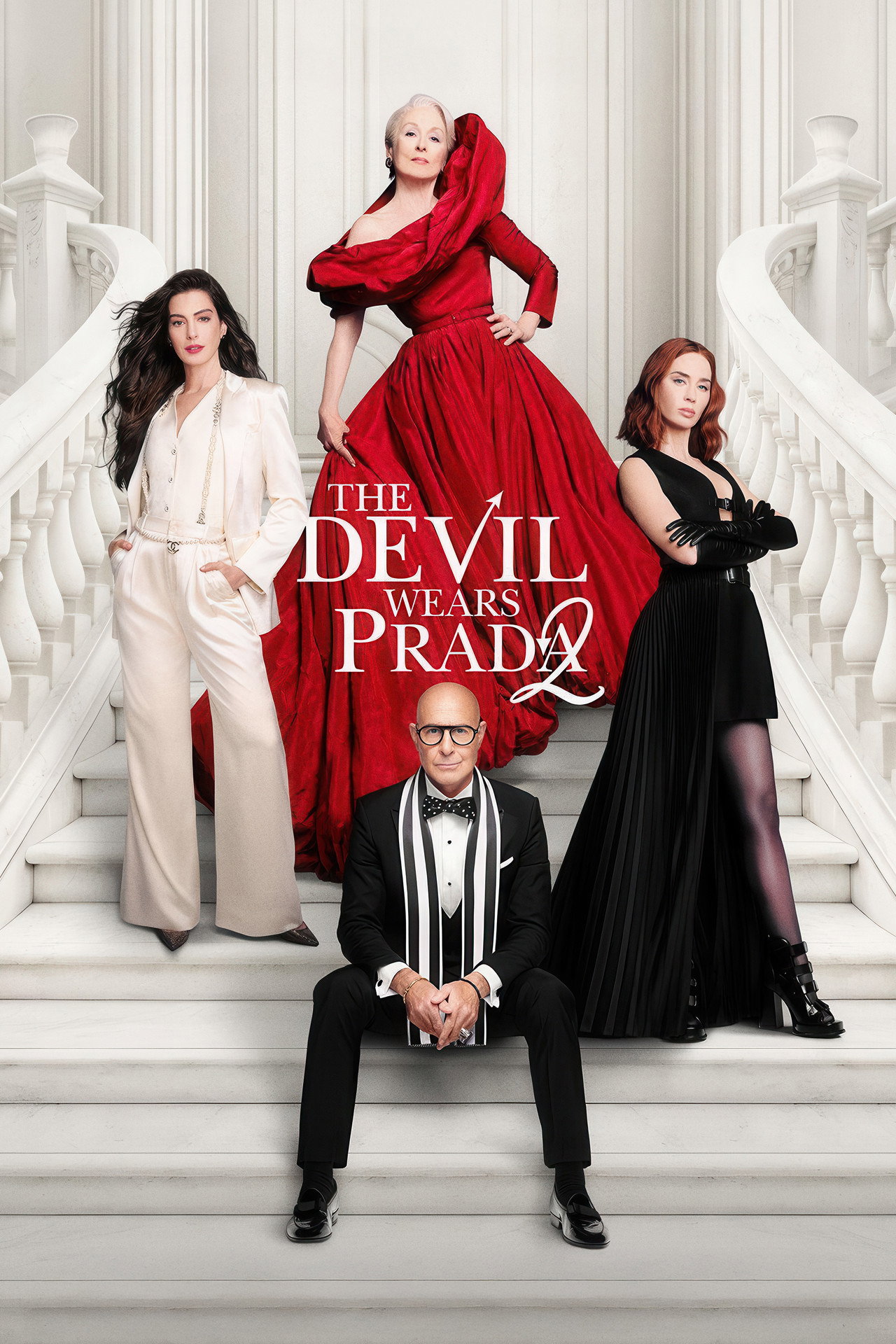
Series Info
| Title | The Devil Wears Prada 2 |
| Type | Movie |
| Release Date | 2026-04-29 |
| Genre | Comedy, Drama |
| Runtime | 119 min |
| Studio / Network | 20th Century Studios |
| Director / Creator | Director: David Frankel |
| Main Cast | Meryl Streep, Anne Hathaway, Emily Blunt, Stanley Tucci |
| TMDB Rating | 6.7 / 10 |
Quick Verdict
Yes — with reservations. The Devil Wears Prada 2 delivers magnetic performances and gorgeous visuals, even when its script can’t quite match the original’s bite.
Twenty years. That’s how long we waited for Miranda Priestly to glide back into our lives. I walked into The Devil Wears Prada 2 with my arms crossed, fully prepared to hate it. Sequels to beloved films almost always feel like cash grabs wearing the skin of something you once loved. But here’s the thing — by the time the opening credits finished and Miranda’s heels clicked across that marble floor, I felt something I didn’t expect: genuine excitement.
This movie shouldn’t work as well as it does. A follow-up to one of the most quoted, meme’d, and rewatched films of the 2000s? The odds were stacked against it from the start. Yet David Frankel, returning to the director’s chair, clearly understands what made the original sing. Whether he can sustain that energy across nearly two hours is a different question — and one I’m still wrestling with.
Overview Of The Devil Wears Prada 2
Released on April 29, 2026, The Devil Wears Prada 2 lands squarely in the comedy-drama space, distributed by 20th Century Studios. Frankel reunites the core cast that made the 2006 film a cultural phenomenon: Meryl Streep returns as the incomparable Miranda Priestly, Anne Hathaway steps back into Andy Sachs’ shoes, Emily Blunt reprises Emily Charlton — now heading her own luxury conglomerate — and Stanley Tucci brings back Nigel with that signature warmth.
The premise shifts the battlefield. Runway magazine faces an existential threat from digital media and collapsing print revenue. Miranda, ever the strategist, needs funding to keep her empire alive. Enter Emily Charlton, whose luxury brand holds the financial keys to Runway’s survival. Andy finds herself pulled back into this world, caught between the woman she once worked for and the friend who survived her. Currently sitting at a 6.7/10 rating and trending across global charts, the film has clearly struck a nerve — even if critics and audiences seem divided on whether that nerve is pleasure or disappointment.
My Take on The Devil Wears Prada 2
I watched the original film in theaters three times. I own the DVD, the Blu-ray, and yes, I’ve argued with strangers about whether Andy made the right choice at the end. So when I say this sequel surprised me, I want you to understand the weight behind that word.
The opening sequence alone hooked me. Frankel doesn’t waste time with exposition dumps — he drops you right into Miranda’s new reality, and the contrast between her old-world authority and the chaotic digital landscape is immediately felt. There’s a scene early on where Miranda scrolls through a tablet with the same disdain she once reserved for lumpy sweaters. It’s a small moment, but it told me this movie had something on its mind.
Where my feelings get complicated is the middle stretch. Around the 40-minute mark, the film starts spinning its wheels. Andy’s re-entry into the Runway orbit feels slightly contrived, and the tension between her and Emily — which should be the emotional spine — takes too long to crystallize. I found myself checking my watch, which never happened during the original.
But then the third act arrives, and something shifts. Without spoiling specifics, there’s a confrontation between Miranda and Emily that had my entire theater holding its breath. That scene reminded me why Streep is Streep and why Blunt has become one of the most compelling actors of her generation. The silence in that room was deafening.
What The Devil Wears Prada 2 Gets Right (And Wrong)
Let me be straight: this movie does more right than wrong. But the wrongs are noticeable enough that I can’t gloss over them.
What works is the evolution of these characters. Andy isn’t the naive assistant anymore — she’s sharpened, more confident, and Hathaway plays that maturity with restraint. Miranda remains terrifying, but Frankel adds layers of vulnerability that feel earned rather than forced. And Emily Charlton? Blunt walks away with this film. Her character’s transformation from bullied subordinate to industry power player is the most satisfying arc in the entire movie.
Now, the problems. First, the commentary on digital media versus print feels about a decade too late. The film frames this conflict like it’s breaking news, when anyone who’s worked in media knows this conversation happened years ago. Lines about “influencers” and “content creators” land with a thud — they sound like what a boardroom thinks young people say. For a movie about an industry that prides itself on being ahead of the curve, the writing here feels behind.
Second, the pacing. The second act drags badly. There’s a subplot involving a potential investor that adds maybe ten minutes of screen time and zero emotional weight. I kept waiting for it to pay off, and it never really does. Cutting that thread entirely would have tightened the film considerably.
Cinematography & Visual Style
Florian Hoffmeister’s lens work deserves serious praise. The fashion sequences are staged with the precision of a Vogue editorial — because of course they are — but what impressed me more were the quieter moments. A late-night conversation between Andy and Nigel is shot in warm, amber tones that feel intimate without being cloying. Miranda’s office, by contrast, is all cold steel and sharp angles, reinforcing her isolation even when surrounded by people. The visual language tells you things the dialogue doesn’t, and that’s craftsmanship.
Acting Performances
Streep could phone in Miranda Priestly in her sleep at this point. She doesn’t. There’s a specificity in her line deliveries here — a slight pause before a cutting remark, a flicker of something human behind those sunglasses — that elevates every scene she’s in. Hathaway does strong work, though she’s occasionally overshadowed by the heavier roles around her. Tucci brings genuine warmth, and his scenes with Hathaway carry real emotional heft. But Blunt is the revelation. She takes a character who could have been a one-note antagonist and turns Emily Charlton into someone you understand, maybe even root for, even when she’s making ruthless choices.
Pacing & Story Structure
As I mentioned, the middle sags. The first act sets up its pieces efficiently, and the third act delivers genuine tension. But that second act — roughly from Andy’s return to Runway through the investor subplot — needed another pass in the editing room. There are stretches where the film seems unsure whether it wants to be a workplace drama, a fashion fantasy, or a mediation on power and loyalty. All three can coexist, but they need tighter weaving than they get here.
Soundtrack & Atmosphere
The music choices are mostly effective. A reimagined version of “Suddenly I See” plays during a pivotal moment, and I’d be lying if I said it didn’t give me chills. The score itself is unobtrusive, which is the right call — this is a film where silence and dialogue carry more weight than orchestral swells. One misstep: a needle drop during a fashion show sequence that felt more TikTok trend than runway chic. It pulled me out of the moment entirely.
Why The Devil Wears Prada 2 Stands Out From Similar Movies
Fashion-focused films tend to fall into two traps: they either take themselves too seriously or reduce the industry to shallow parody. The original The Devil Wears Prada threaded that needle brilliantly, and the sequel mostly follows suit. Compare it to something like Cruella, which leaned so hard into stylized villainy that the fashion became secondary to the theatrics. Prada 2 keeps its eyes on the clothes and the people who make them matter.
Then there’s Confessions of a Shopaholic, which treated fashion as punchline rather than world. Frankel’s film respects the industry enough to show its brutality alongside its beauty. What separates this sequel from those comparisons is its willingness to let characters age and change. Andy isn’t the same woman. Miranda isn’t the same editor. The world around them has shifted, and the film acknowledges that rather than pretending two decades haven’t passed. That temporal honesty gives it a weight that most fashion comedies can’t manage.
Is The Devil Wears Prada 2 a Good Starting Point? (Viewing Guide)
No. Full stop. If you haven’t seen the 2006 original, this sequel will leave you cold. The emotional beats rely entirely on your existing investment in these characters. When Miranda and Andy share their first scene together, the tension only works if you remember that famous car ride in Paris. When Emily Charlton asserts her dominance, the impact comes from knowing where she started. Watch the first movie. Live with it. Then come to this one.
Is The Devil Wears Prada 2 Worth Watching?
Yes — if you loved the original and want to see these characters again. The performances alone justify the ticket price, and the third act delivers genuine emotional payoff. Just don’t expect the lightning-in-a-bottle magic of 2006.
Who Should Watch (And Who Should Skip)
Watch if you:
- Quote the original film regularly and have strong opinions about cerulean
- Want to see Emily Blunt command every frame she’s in
- Appreciate fashion as both art and industry
- Enjoy character-driven dramas over plot-heavy spectacles
Skip if you:
- Haven’t seen the first movie and don’t plan to
- Expect sharp, current media commentary — this feels a step behind
- Need tight pacing throughout — the second act will test your patience
- Want the same fresh energy of the original; nostalgia drives this more than innovation
Final Verdict
The Devil Wears Prada 2 is a better sequel than I expected and a lesser film than I wanted. Frankel and his cast deliver enough style, heart, and powerhouse acting to make this worth your time, even when the script reaches for insights it can’t quite grasp. The fashion is flawless, the performances are fierce, and Blunt walks away with the whole thing tucked under her arm. But that sluggish middle act and the dated media commentary keep it from sitting alongside its predecessor. Miranda Priestly once said, “Florals? For spring? Groundbreaking.” This sequel isn’t groundbreaking. But like a well-cut coat, it fits well enough to wear with pleasure.
Frequently Asked Questions
Is The Devil Wears Prada 2 a direct sequel?
Yes. It picks up years after the original film, with Andy Sachs returning to the Runway world and Miranda Priestly facing a changed media landscape. Watching the 2006 movie first is essential.
Is The Devil Wears Prada 2 better than the original?
No — and honestly, few sequels ever are. What it does offer is a different flavor: more reflective, more corporate, and less fresh than the 2006 film but still entertaining thanks to its cast.
How long is The Devil Wears Prada 2?
The runtime is 119 minutes. It feels longer in the second act due to some pacing issues, but the third act picks up considerably.
Is The Devil Wears Prada 2 worth watching in 2026?
Absolutely, if you loved the original. The fashion, the performances, and the nostalgia hit hard. Just temper your expectations for the script’s depth.
Ready to watch The Devil Wears Prada 2?
Check out our complete streaming guide to find out where you can watch it right now.