
In-Depth Review: Widow’s Bay
| Title | Widow's Bay |
| Type | Tv |
| Release Date | 2026-04-28 |
| Genres | Drama, Mystery, Comedy |
| Studio/Network | Apple TV |
| Director/Creator | Creator: Katie Dippold |
| TMDb Rating | 6.5/10 (2 votes) |
| Where to Watch | Check streaming availability |
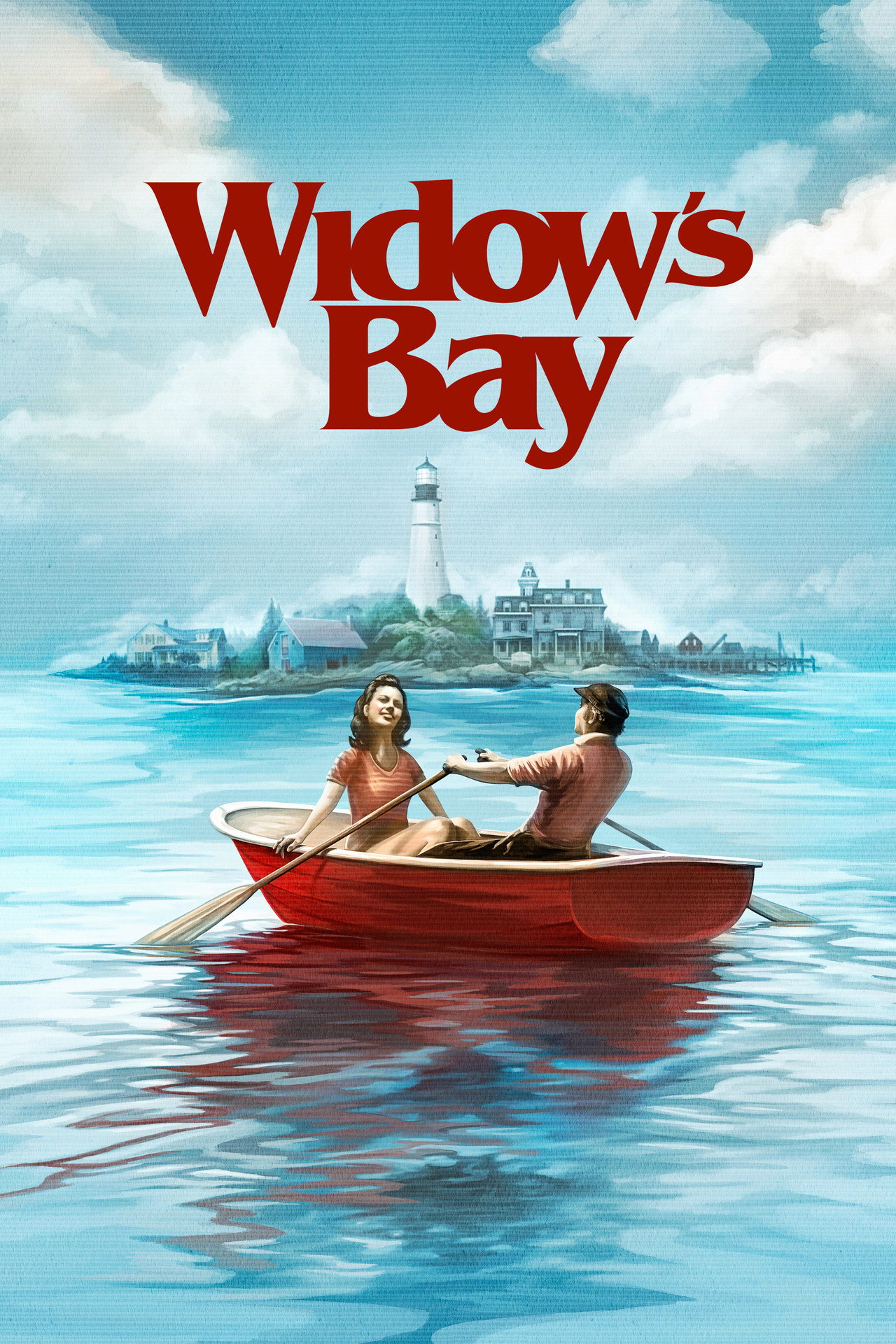
Widow’s Bay is a comedy-mystery-drama hybrid on Apple TV+ following Mayor Tom Loftis as he tries to transform a cursed New England island town into a tourist destination. Created by Katie Dippold, it stars Matthew Rhys and premiered April 28, 2026.
There’s a particular kind of dread that settles in when a stranger tells you not to ask questions. It’s the kind of warning that crawls under your skin precisely because it’s delivered with a smile — the sort of polite, glassy-eyed hospitality that makes you wonder what happened to the last person who didn’t listen. That’s the note Widow’s Bay hits in its opening minutes, and honestly? I was hooked before the title card even appeared.
Overview of Widow’s Bay
Arriving on Apple TV+ in late April 2026, Widow’s Bay is the kind of series that refuses to sit neatly in a single genre bucket. Creator Katie Dippold — whose writing credits span from The Heat to Ghostbusters — has crafted something that toggles between mystery, drama, and comedy with the casual confidence of someone who knows the rules well enough to break them. The premise is deceptively simple: Matthew Rhys plays Mayor Tom Loftis, a man convinced his small New England island town can become the next must-visit destination. The locals disagree. Not because they hate progress, but because they believe the place is genuinely, seriously, no-metaphor-intended cursed.
Joining Rhys is a cast that reads like a character actor’s dream draft. Stephen Root plays Wyck, a town elder whose every line delivery suggests he’s holding back a library’s worth of secrets. Kate O’Flynn brings a brittle intelligence to Patricia, while Kevin Carroll’s Bechir and Dale Dickey’s Rosemary round out a community that feels lived-in and weather-beaten in the best way. These aren’t archetypes shuffled onto an island set. They feel like people who’ve known each other too long and seen things they’d rather forget.
With a TMDb rating hovering around 6.5, the early consensus suggests a show that’s competent but divisive. That tracks. Widow’s Bay isn’t trying to be the next Severance or the next Ted Lasso — it’s something stranger, more niche, and arguably more interesting for its refusal to pick a lane.
My Take on Widow’s Bay
I went into this series expecting a lightweight coastal mystery with some quippy dialogue and foggy establishing shots. What I got was something closer to a slow burn that occasionally catches fire in unexpected ways. By the third episode, I found myself pausing not because I was bored, but because a scene had landed with a weight I wasn’t anticipating. Dippold’s comedic instincts are still present — there’s a sequence involving a town hall meeting that had me laughing out loud — but she deploys them surgically rather than broadly.
Rhys is the anchor here, and he’s doing something quietly impressive. His Tom Loftis isn’t the buffoonish small-town politician you might expect from the logline. There’s genuine ambition driving this character, but also a thread of desperation that Rhys reveals in glances rather than speeches. Watch his face during a scene where he’s being shown the town’s “attractions” — the micro-expressions flicker between hope, doubt, and something close to fear. It’s a performance that rewards paying attention.
What stayed with me most, though, was the atmosphere. This is a show that understands the uncanny beauty of the northeastern coast — the way fog can make a familiar shoreline look like the edge of the known world. The island itself becomes a character, and by the halfway point, I wasn’t sure whether I wanted to visit or flee. Possibly both.
What Widow’s Bay Gets Right (And Wrong)
No series is flawless, and pretending otherwise does nobody any favors. Widow’s Bay has genuine strengths and equally genuine weaknesses, and both deserve honest assessment.
Cinematography & Visual Style
This is where the show flexes hardest. The visual language of Widow’s Bay borrows from the New England gothic tradition without being enslaved by it. There are shots of the harbor at dawn that feel like Andrew Wyeth paintings brought to life — muted grays, wind-battered grass, a lonely figure silhouetted against a sky that promises nothing good. The color palette shifts subtly as the series progresses, with warmer tones creeping into scenes that should feel safe, creating a dissonance that’s genuinely unsettling.
The camera work during interior scenes deserves specific praise. There’s a technique employed in Wyck’s home — slow, almost imperceptible zooms that tighten the frame until you realize you’re holding your breath. It’s the kind of choice that signals confidence in the material. No need to jolt the audience with quick cuts when dread builds itself.
That said, the visual approach isn’t always consistent. A handful of scenes, particularly in the middle episodes, default to flat, shot-reverse-shot coverage that feels more functional than intentional. These moments stand out precisely because the surrounding material is so visually ambitious. It’s like watching a painter step away from the canvas and return with a roller instead of a brush.
Acting Performances
Rhys has already been mentioned, but the ensemble deserves closer examination. Stephen Root is doing what Stephen Root does best — disappearing into a character so thoroughly that you forget the actor exists. Wyck could have been a stock “cryptic local” role, but Root invests him with a specificity that elevates every scene he’s in. His line readings have a musicality to them, pauses placed like rests in sheet music, and the effect is mesmerizing.
Dale Dickey as Rosemary delivers what might be the most emotionally honest performance in the entire series. She has a monologue in the back half of the season that I won’t spoil, but it’s the kind of scene that makes you stop scrolling on your phone and actually watch. Raw, unadorned, and devastating in its simplicity.
The weaker link, surprisingly, is Kate O’Flynn’s Patricia — though the issue seems more structural than performative. The character is written with contradictions that feel unintentional rather than complex, and O’Flynn does admirable work trying to bridge the gaps. But there are scenes where you can feel the seams, moments where Patricia’s behavior serves the plot rather than her own internal logic. It’s a frustrating choice in a show that otherwise respects its characters’ autonomy.
Pacing & Story Structure
Here’s where things get complicated. Widow’s Bay has a pacing problem, but it’s not the kind you might expect. The early episodes move with deliberate, almost glacial slowness — and I mean that as a compliment. The show takes its time establishing the town, its rhythms, its unspoken rules. This is patient storytelling that trusts the audience to invest before delivering payoffs.
The issue arrives around episodes four and five, where the narrative seems to suddenly remember it has mysteries to resolve and begins rushing toward revelations that would have landed harder with more runway. It’s the television equivalent of a runner who jogs the first half of a race and then sprints the second — the change in tempo is jarring, and some of the reveals suffer for it.
The structure also suffers from what I’d call “streaming bloat” — scenes that exist to fill time rather than advance character or plot. A subplot involving a visiting journalist, for instance, introduces intriguing ideas but ultimately feels like a detour that could have been streamlined without losing anything essential. Tighter editing could have transformed a good show into a genuinely great one.
Soundtrack & Atmosphere
The sonic landscape of Widow’s Bay is its secret weapon. The score leans heavily on traditional folk instruments — fiddles, accordions, the kind of weathered piano that sounds like it’s been sitting in a saltwater-soaked parlor for decades — and weaves them into something that feels both ancient and unsettling. There are musical motifs that recur at key moments, gaining new meaning each time, and by the season’s end, I was hearing those phrases in my head hours after watching.
The diegetic sound design deserves recognition too. The creak of wooden docks, the particular quality of wind through bare branches, the muffled quality of voices carried across water — these details accumulate into a soundscape that makes the island feel real in a way that purely visual world-building can’t achieve. I watched several scenes with headphones on and caught layers of ambient noise that would be entirely missed on laptop speakers. This is a show that rewards good audio equipment.
If there’s a weakness here, it’s in the occasional reliance on musical stings to signal “this is creepy” moments. The atmospheric work is strong enough that these jump-scare-adjacent audio cues feel unnecessary, even patronizing. Trust your audience. We already know something’s wrong on this island.
Why Widow’s Bay Stands Out
To understand what makes this series interesting, it helps to look at its peers. The most obvious comparison is Garth Marenghi’s Darkplace — another show that blends comedy with horror-adjacent atmosphere. But where Darkplace was explicitly parodic, playing its terrible soap-opera aesthetics for laughs, Widow’s Bay plays its strangeness straight. The humor here emerges from character and situation, not from ironic distance. These people aren’t in on the joke because there isn’t one. The curse, whatever it is, isn’t funny to them.
A more useful comparison might be Summer Time Rendering, the Japanese mystery-thriller that also centers on an island community hiding dark secrets. Both shows share an interest in how isolation breeds strange beliefs, and how outsiders disrupt carefully maintained ecosystems of denial. But where Summer Time Rendering escalates into full-throttle sci-fi action, Widow’s Bay stays grounded in the mundane. The horror here is domestic, neighborly, baked into the fabric of daily life. It’s the dread of realizing that the people you’ve known for decades have been lying to you — or worse, telling you the truth all along and you just didn’t want to hear it.
The third touchstone worth mentioning is Fake Documentary “Q”, which shares Widow’s Bay’s fascination with how communities construct narratives to explain the inexplicable. Both shows understand that folklore isn’t just entertainment — it’s a survival mechanism, a way of encoding warnings into stories that outlast any single teller. Dippold’s writing treats this material with genuine respect, never reducing the town’s beliefs to simple superstition. Whether the curse is real is almost beside the point. The belief is what matters.
What distinguishes Widow’s Bay from all three is its tonal range. It can shift from a genuinely funny scene about local bureaucracy to something quietly devastating without whiplash. That’s a hard trick to pull off, and the fact that it works more often than not speaks to Dippold’s instincts as a writer and the cast’s ability to navigate those shifts.
Is Widow’s Bay Worth Watching?
Yes, with caveats. If you’re looking for a propulsive mystery that resolves cleanly, you’ll likely find the pacing frustrating and the conclusions unsatisfying. This isn’t a puzzle box designed for Reddit threads — it’s closer to a mood piece that happens to contain mysteries. The questions it raises about community, belief, and the stories we tell ourselves matter more than the answers it provides.
For fans of Matthew Rhys, this is essential viewing. He’s doing some of the most restrained, interesting work of his career here, and the character allows him to stretch in directions that his role on The Americans never permitted. For fans of slow-burn atmosphere and New England gothic, Widow’s Bay offers a setting so vivid you can practically smell the salt air and hear the gulls. For everyone else, it’s a solid 7 out of 10 — imperfect, occasionally meandering, but genuinely trying to do something different on a platform that increasingly rewards sameness.
Apple TV+ has been building an impressive roster of idiosyncratic content, and this fits squarely in that tradition. It’s not going to break the internet or dominate water-cooler conversation. But in five years, when people are discovering it for the first time and wondering how they missed it, I won’t be surprised at all. Sometimes the best shows are the ones that wait for you to find them.
📰 More From Watchlist Wizard
Frequently Asked Questions
Where can I watch Widow’s Bay?
Widow’s Bay is streaming exclusively on Apple TV+. You’ll need an Apple TV+ subscription to watch all episodes. Check the Apple TV app on your preferred device for current availability in your region.
What is Widow’s Bay about?
The series follows Mayor Tom Loftis, played by Matthew Rhys, as he attempts to transform a small New England island town into a tourist destination despite locals insisting the place is cursed. The show blends drama, mystery, and comedy as the town’s dark history and strange occurrences complicate his plans.
Where was Widow’s Bay filmed?
While specific filming locations for Widow’s Bay haven’t been widely publicized, the series is set on a fictional New England island and its coastal atmosphere is integral to the show’s identity. The production captures the distinctive look and feel of the northeastern seaboard with impressive authenticity.
What is the new show with Matthew Rhys?
Widow’s Bay is Matthew Rhys’s latest series, premiering April 28, 2026 on Apple TV+. He stars as Mayor Tom Loftis, a determined small-town politician navigating a community that believes their island is cursed. It marks a notable shift from his acclaimed dramatic work into territory that blends mystery with dark comedy.
Ready to watch Widow’s Bay?
Check out our complete streaming guide to find out where you can watch it right now.