
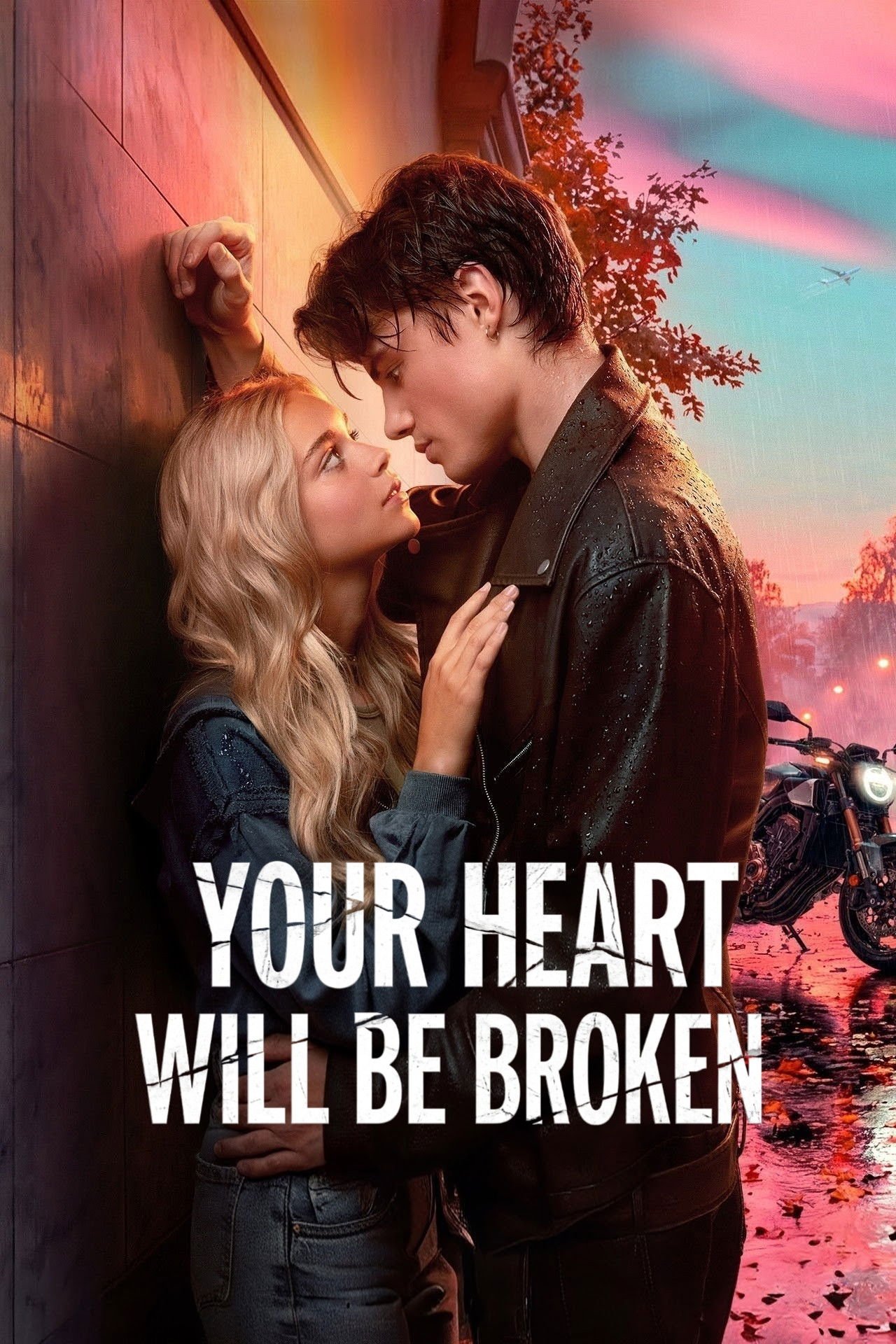
Cast & Characters Guide: Your Heart Will Be Broken
| Title | Your Heart Will Be Broken |
| Type | Movie |
| Release Date | 2026-03-26 |
| Genres | Romance, Drama |
| Runtime | 134 min |
| Studio/Network | All Media A Start Company |
| Director/Creator | Director: Mikhail Vaynberg |
| TMDb Rating | 7.2/10 (61 votes) |
| Where to Watch | Check streaming availability |
Your Heart Will Be Broken stars Veronika Zhuravleva as Polina and Daniel Vegas as Bars in a Russian high-school romance about a fake-relationship deal that turns dangerously real. The ensemble also features Ivan Trushin, Maksim Saprykin, and Alya Mayer.
I’ve sat through enough teen-romance dramas to smell a formula from the opening frame, but this one caught me off guard. There’s a moment early in the film — a hallway confrontation where the camera refuses to cut away from Polina’s face as the taunting escalates — that made my stomach drop. That sustained discomfort is precisely what separates Mikhail Vaynberg’s 134-minute feature from the mountain of lookalike youth romances crowding streaming platforms. The casting choices here don’t just serve the story; they elevate it from genre exercise into something that lingers.
Your Heart Will Be Broken – Full Cast Guide
The film operates on a deceptively simple premise: bullied new girl strikes a bargain with her tormentor, and both get more than they bargained for. What makes the ensemble work is how Vaynberg refuses to let anyone occupy a pure archetype. Even the characters who seem designed to be obstacles carry their own wounded logic. At 134 minutes, there’s enough room for each performer to shade in the gaps between what their characters say and what they actually want — and that’s where this Russian drama earns its TMDb 7.2 rating, not in grand gestures but in the small, involuntary betrayals that flicker across faces before composure kicks in.
Veronika Zhuravleva as Polina
Zhuravleva carries the emotional architecture of the entire film on her shoulders, and she does it with a restraint that borders on unsettling. Polina arrives at her new school already armored — you can read the history of previous betrayals in how she holds her bag against her chest like a shield. The deal she strikes with Bars isn’t naive optimism; it’s calculated survival from someone who’s learned that vulnerability only buys you more damage. What Zhuravleva nails is the gradual, almost involuntary dismantling of that armor. Watch her eyes during the scenes where Bars surprises her with unexpected gentleness — there’s a micro-flinch, a reflexive distrust, before the warmth seeps through. That fraction of a second tells you more about the character than any monologue could.
Her background in Russian television drama serves her well here; she knows how to modulate for the camera without shrinking. But there’s a rawness in this performance that feels newly excavated, as if Vaynberg pushed her past the point where technique ends and instinct takes over. By the midpoint, I found myself leaning forward whenever she was on screen, trying to read the calculations happening behind those careful expressions.
Daniel Vegas as Bars
Casting a character named after a predatory animal — “Bars” translates roughly to a snow leopard or lynx — sets an immediate expectation, and Vegas both fulfills and subverts it. His Bars carries himself with the loose, almost bored confidence of someone who’s never had to question his position in the social hierarchy. The bullying isn’t theatrical cruelty; it’s casual, which makes it far more chilling. Vegas plays him like someone who weaponizes charm as reflexively as breathing.
The transformation, when it comes, isn’t a sudden redemption arc. That’s what I appreciated most. Instead, Vegas lets you see the cracks forming in real time — a held gaze that lasts one beat too long, a protective gesture that happens before his conscious mind can veto it. He never fully stops being dangerous, and that tension keeps the romantic thread from curdling into sweetness. Whether Bars truly changes or merely recalibrates his strategy is a question the film wisely leaves ambiguous, and Vegas’s performance sustains both readings simultaneously.
📖 Related: Check out our streaming guide
Ivan Trushin as Laym
Every romance needs its complicating force, and Trushin’s Laym occupies that role with an interesting twist: he’s not a villain. He’s the person who sees the dynamic between Polina and Bars from the outside and recognizes the damage before either of them will admit it. Trushin plays him with a quiet, almost clinical concern that initially reads as jealousy but gradually reveals itself as genuine protectiveness born from experience. His scenes with Polina have a different rhythm — slower, more deliberate — as if he’s trying to offer her an off-ramp she’s not ready to take.
📖 Related: Check out Heartbreaking Magic: Your Heart Will Be Broken Ultimate Review
Trushin’s greatest strength here is economy. He does more with a slight lean away from a conversation, or a pause before responding, than most actors manage with pages of dialogue. Laym represents the path not taken, and Trushin makes that alternative feel genuinely viable rather than perfunctory.
Maksim Saprykin as Lyokha
If Bars is the apex of the school’s social pyramid, Lyokha is the guy who holds the ladder steady — and Saprykin makes that position feel like its own kind of prison. There’s a studied loyalty in how Lyokha shadows Bars, but Saprykin layers in glances that suggest the cost of that allegiance. He knows things are shifting. He can feel the ground moving under the hierarchy, and his response — a tightening rather than a retreat — speaks to someone terrified of losing the only identity he’s constructed.
The character could have been a simple enforcer type, but Saprykin gives Lyokha enough interior life that his eventual choices carry real weight. When he’s forced to pick a side, the decision isn’t clean, and the actor doesn’t play it clean. There’s visible resentment, self-preservation, and something that might be grief all tangled together in a single expression.
Alya Mayer
Mayer’s role is the most intriguing puzzle in the cast list — and I mean that as a compliment. She operates in the margins of the central story, appearing in scenes that initially seem tangential until their cumulative weight becomes undeniable. Without revealing specifics, Mayer brings an observational quality that functions like a mirror: her reactions to the central couple tell you what the film thinks about what you’re watching. It’s a tricky, almost metatextual performance, and Mayer handles it with an intelligence that never breaks character into commentary.
Supporting Cast Worth Noting
The film’s adult characters — Polina’s family members and school staff — appear sparingly, but Vaynberg uses them like pressure valves. Every time the teenage world threatens to feel hermetically sealed, an adult intrudes with a reminder that these dynamics exist within a larger ecosystem of expectations and failures. The family scenes in particular have a documentary roughness; arguments overlap, people talk past each other, and nobody gets a tidy emotional resolution. These supporting turns resist the urge to perform “parental concern” in quotation marks, and the film is stronger for their refusal to simplify.
Classmates who orbit the central deal get just enough screen time to remind you that high school is a fishbowl — every performance, however small, is being watched and judged by an audience that will weaponize any vulnerability it detects.
Behind the Casting Decisions
Mikhail Vaynberg’s approach to casting this production reflects a broader trend in contemporary Russian cinema: favoring relatively fresh faces over established stars for youth-oriented material. The decision pays dividends here. When you don’t carry preexisting associations with an actor, the character arrives unmediated. Zhuravleva and Vegas have a chemistry that feels discovered rather than manufactured — there’s an unpredictability in their exchanges, a sense that neither is entirely sure what the other will do next.
What’s particularly smart about this ensemble is the age-appropriate casting. Too many films in this genre cast actors in their mid-twenties and ask them to regress. Here, the performances carry the gawkiness, the overcorrections, the moments of graceless intensity that are specific to teenagers who haven’t yet learned to mask their feelings smoothly. That authenticity is the foundation on which the whole romance rests. Without it, the deal premise would feel contrived; with it, the arrangement acquires the desperate logic of people who haven’t yet accumulated enough experience to recognize their own patterns.
Vaynberg has reportedly worked extensively in short-form and documentary contexts before this feature, and that background shows in how he trusts his cast to simply exist in moments rather than perform them. The camera stays with actors past the point where most directors would cut, capturing the aftermath of emotion — the exhale, the regrouping, the moment when the mask slides back into place. It’s a directorial instinct that only works if you trust your cast, and Vaynberg clearly chose performers who reward that trust.
📰 More From Watchlist Wizard
- Where to Watch Your Heart Will Be Broken Online →
- 10 Movies Like Balls Up You Need to Watch →
- Balls Up: Epic Comedy That Delivers Shocking Laughs →
Frequently Asked Questions
Where can I watch Your Heart Will Be Broken?
As of its March 26, 2026 release date, streaming availability hasn’t been confirmed across major platforms. Check your regional services — Russian cinema often appears on platforms like KinoPoisk or Okko before wider international distribution. For English-speaking audiences, watch for festival circuit announcements or specialty streaming pickups in the months following release.
Is Your Heart Will Be Broken based on a book?
The film isn’t publicly credited as an adaptation of a specific novel, though its premise echoes familiar YA romance territory. The “fake relationship” structure has deep roots in both Western and Russian young-adult fiction, and the film’s emotional specificity suggests either original writing or a source that hasn’t been widely translated.
What is the #1 saddest movie of all time, and how does this compare?
That title depends entirely on who you ask — critics often cite Ozu’s Tokyo Story or Von Trier’s Dancer in the Dark, while audiences lean toward films like Schindler’s List or Grave of the Fireflies. Your Heart Will Be Broken doesn’t aim for that level of devastation; its sadness is smaller and more personal, rooted in the specific ache of first love colliding with circumstances beyond teenage control. It’s a bruise, not a wound.
Are Russian teen dramas like this one based on true stories?
While some Russian youth dramas draw from real events, this film appears to be a fictional narrative rather than a documented true story. However, the bullying dynamics and social hierarchies it portrays reflect documented realities in Russian secondary schools, which is why the emotional landscape feels authentic even when the specific plot is constructed.
The strength of this cast is that they make you forget you’re watching a romance with a premise. By the time the deal between Polina and Bars stops being a transaction and starts being something neither of them can name, you’re already too invested to analyze the machinery. That’s not manipulation — it’s craft. And it’s the reason this particular entry in the genre deserves more than a passing glance when it arrives in March.
Ready to watch Your Heart Will Be Broken?
Check out our complete streaming guide to find out where you can watch it right now.