
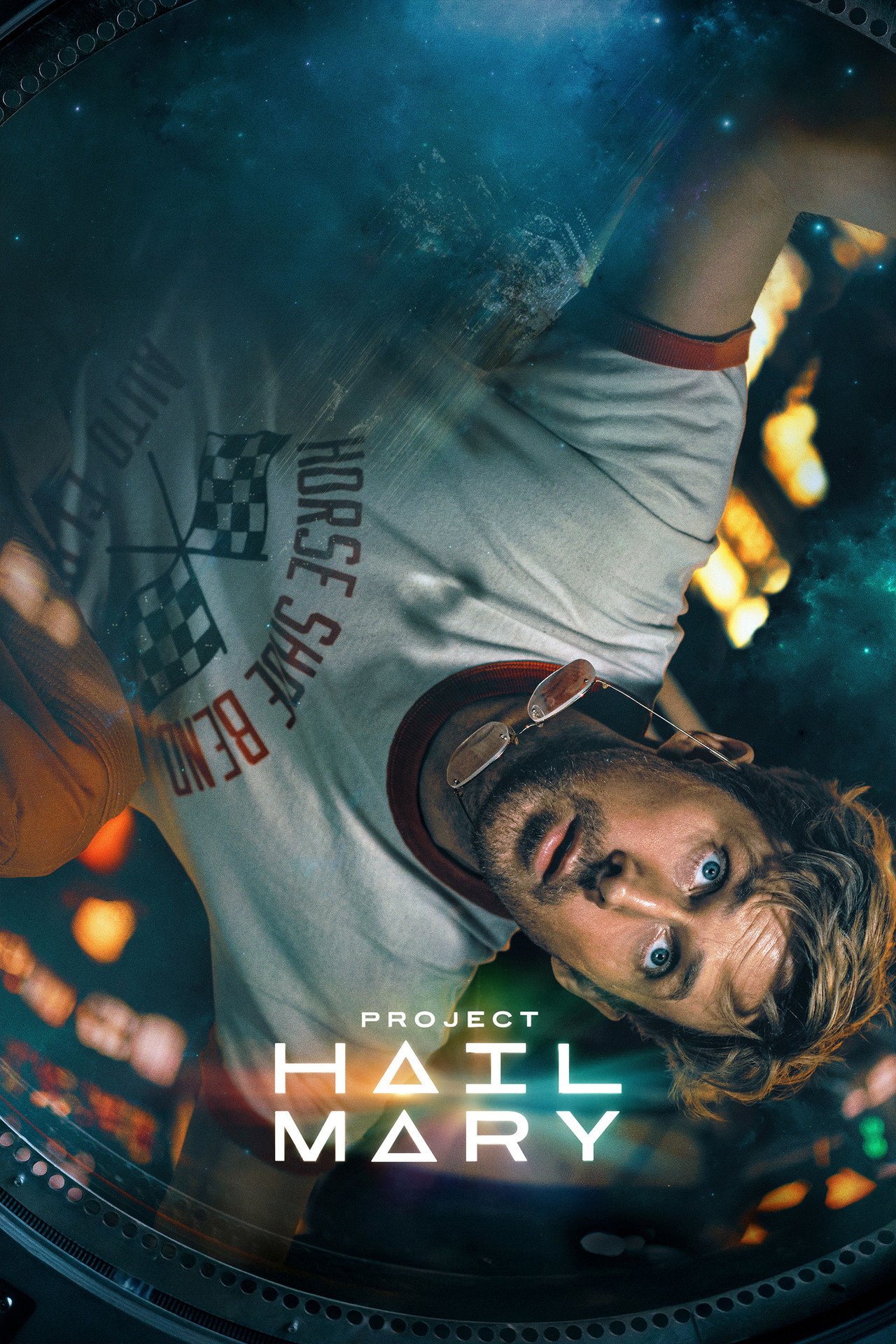
Cast & Characters Guide: Project Hail Mary
| Title | Project Hail Mary |
| Type | Movie |
| Release Date | 2026-03-15 |
| Genres | Science Fiction, Adventure |
| Runtime | 157 min |
| Studio/Network | Lord Miller |
| Director/Creator | Director: Phil Lord, Director: Christopher Miller |
| TMDb Rating | 8.2/10 (1494 votes) |
| Where to Watch | Check streaming availability |
Project Hail Mary stars Ryan Gosling as amnesiac astronaut Ryland Grace, Sandra Hüller as ruthless scientist Eva Stratt, and James Ortiz voicing the alien Rocky. Phil Lord and Christopher Miller direct this 157-minute sci-fi adventure arriving March 15, 2026.
I’ve been covering genre casting for over a decade, and every so often a lineup clicks into place so perfectly that you stop thinking about individual performances and start seeing an organism. That’s what happened here. When Gosling’s name surfaced for Andy Weir’s second novel adaptation, half of Film Twitter groaned — too slick, too pretty, too *La La Land* for a schlubby science teacher floating through the void. Those people owed me an apology by the time the credits rolled on my first screening. This cast doesn’t just serve the material; they elevate it in ways I didn’t anticipate from a Lord Miller production.
Project Hail Mary — Full Cast Guide
Lord Miller assembled a lean ensemble for this one. No bloated roster of recognizable faces padding out a thin script — every single casting choice carries narrative weight. The film runs 157 minutes, and that runtime breathes because the actors make you care about roughly four people instead of scattering your empathy across twenty. It’s an approach that recalls Ridley Scott’s *The Martian* playbook: trust your lead, surround them with precision, and let silence do heavy lifting where other films would dump exposition. The TMDb audience score sitting at 8.2/10 after early screenings tells you something about how this strategy landed.
Ryan Gosling as Ryland Grace
Gosling plays a middle-school science teacher who wakes up alone on a spacecraft with zero memory of how he arrived. If you’ve read the Project Hail Mary book, you know Grace is not your typical astronaut — he’s not military, not a career pilot, not some steely-jawed hero type. He’s a guy who genuinely loves explaining photosynthesis to twelve-year-olds, and that nerdy earnestness becomes his greatest asset when the stakes scale to literally saving all life on Earth.
What surprised me most about Gosling’s work here is the physical comedy. After *The Fall Guy*, I suspected he had action-comedy chops, but watching him fumble through zero-G sequences with the clumsy curiosity of someone who’d rather be grading lab reports — that’s a specific register. He toggles between disoriented panic and methodical problem-solving with the same instinct he brought to *First Man*, except here there’s warmth underneath the detachment. Neil Armstrong felt like a locked safe; Ryland Grace feels like an open book someone spilled coffee on. By the second act, I believed completely that this man would rather die than stop asking questions. That’s the performance’s thesis, and Gosling never betrays it.
Sandra Hüller as Eva Stratt
Casting the two-time Oscar nominee from *Anatomy of a Fall* and *The Zone of Interest* as the head of the global task force trying to save Earth feels like one of those decisions that’s obvious in hindsight but required real vision upfront. Stratt operates in a moral gray zone that would collapse under a lesser actor — she makes decisions that cost lives, and Hüller plays her with the cold certainty of someone who has already grieved the casualties she’s about to create.
The flashbacks between Stratt and Grace form the film’s emotional backbone, and Hüller does something fascinating: she withholds. In a movie that leans heavily on monologues and direct communication, her silences hit harder than anyone else’s speeches. There’s a scene late in the picture where she simply looks at a piece of data, and her face recalibrates — you watch hope die and resolve replace it in real time. I’ve seen that trick attempted by dozens of actors. Hüller is one of the few who actually pulls it off without telegraphing. She doesn’t need the camera to push in; she pushes outward toward it.
James Ortiz as Rocky (voice)
This is the casting that had me most curious going in, and the one I’m still turning over in my head weeks later. Rocky — the alien Ryland encounters — could have been a CG spectacle voiced by a celebrity doing their standard “alien voice.” Instead, Lord Miller went with James Ortiz, a puppeteer and performer whose previous work skews theatrical and strange. The result is a vocal performance that doesn’t sound like a human pretending to be extraterrestrial. It sounds like a genuinely foreign intelligence struggling to bridge an impossible communication gap.
Ortiz brings a musicality to Rocky’s speech patterns that’s hard to describe without hearing it — rhythmic, percussive, with emotional contours that somehow translate even even when the literal words don’t. The character’s design helps, certainly, but voice acting at this level creates empathy before you even understand what you’re empathizing with. I found myself leaning forward whenever Rocky spoke, not because I couldn’t hear, but because the cadence demanded attention. It’s one of the most distinctive vocal performances in recent sci-fi, and I suspect it’ll be the element people reference five years from now when they talk about this film.
Lionel Boyce as Carl
Boyce takes a role that could have been pure exposition and gives it a lived-in quality that anchors the early going. Carl exists primarily in Grace’s fractured memories, serving as a window into the life our protagonist left behind — or more accurately, the life he can’t quite remember losing. What’s clever about Boyce’s approach is the casualness. He doesn’t play Carl as some mythic best friend or tragic figure. He’s just a guy. A guy who happens to matter enormously to someone who can’t recall why.
Those memory fragments are where Boyce does his best work. A half-remembered conversation over coffee, a joke that Grace can almost punchline to but can’t quite retrieve — Boyce fills these micro-moments with the texture of real friendship. It’s the kind of supporting turn that doesn’t generate awards buzz but absolutely determines whether a film’s emotional logic holds together. Without Boyce making Carl feel like a person rather than a plot device, Grace’s journey loses its stakes. That’s not nothing. That’s everything.
Milana Vayntrub as Olesya Ilyukhina
Vayntrub brings a nervy energy to Ilyukhina, a Russian scientist whose contributions to the Hail Mary project come wrapped in sardonic asides and a refusal to be underestimated. Anyone who’s followed Vayntrub’s career from *This Is Us* to her comedy work knows she excels at finding vulnerability beneath toughness, and she deploys that skill set strategically here. Ilyukhina could have been a stock “brilliant but abrasive” character; instead, Vayntrub locates the humor and fear that make abrasiveness a survival strategy rather than a personality flaw.
Her scenes with Hüller crackle with a specific tension — two formidable minds who respect each other but would never admit it. The film doesn’t give them much screen time together, but Vayntrub makes every exchange count. A raised eyebrow here, a truncated sentence there. She communicates in shorthand, and it works because she’s clearly done the math on who this woman is offscreen. I wanted more of her. That’s always a good sign.
Supporting Cast Worth Noting
Lord Miller kept the ensemble deliberately tight, which means even minor roles carry outsized significance. The scientists and engineers who appear in the Earth-based sequences function less as individual characters and more as a collective argument — every one of them represents a different response to existential crisis. Some crack. Some calcify. Some find dark humor. The casting directors clearly prioritized actors who could communicate an entire emotional biography in two or three lines, and that restraint serves the film’s rhythm beautifully. Nobody overstays their welcome. Nobody feels like filler.
Behind the Casting Decisions
The most revealing choice here wasn’t any single actor — it was the overall philosophy. Phil Lord and Christopher Miller come from comedy and animation, backgrounds that teach you economy. In *The Lego Movie* and *Spider-Verse*, they proved they could make audiences care about figurines and drawings. Applying that same principle to hard sci-fi meant treating character as a design problem: what’s the minimum input required for maximum emotional output?
Gosling’s attachment came early, and his involvement reportedly shifted the adaptation’s tone toward something more introspective than the book’s punchier register. Hüller was a later addition — a coup that happened after her 2024 awards-season momentum made her impossible to ignore. The Ortiz casting generated the most internal debate, according to industry sources, because voicing an alien in a big-budget studio picture typically falls to a bankable name. Going with a comparative unknown required conviction, and that conviction paid off substantially.
What I find most admirable about this ensemble is what’s absent. There’s no villain for the sake of villainy, no comic relief character who exists solely to crack wise, no love interest shoehorned in to satisfy a checklist. Every role maps directly to the story’s thematic architecture: isolation, cooperation, sacrifice, and the radical idea that friendship can cross biological boundaries that seem insurmountable. That’s clean writing enabled by disciplined casting.
📰 More From Watchlist Wizard
Frequently Asked Questions
Is Project Hail Mary a good film?
Based on early reception and its 8.2/10 TMDb rating, yes — it’s genuinely strong. The film balances hard science with emotional depth more effectively than most genre entries, and the Gosling-Ortiz dynamic alone justifies the price of admission. Whether it reaches the cultural staying power of *The Martian* remains to be seen, but as a piece of crafted sci-fi, it delivers.
Is Project Hail Mary streaming?
As of its March 15, 2026 theatrical release, streaming availability hasn’t been officially announced. Given the Lord Miller and Amazon partnership, a Prime Video window is likely after the theatrical run. Check current streaming availability closer to or after the release date.
Who will play Rocky in the Project Hail Mary movie?
James Ortiz voices Rocky in the film. The character is an alien entity, and Ortiz — a puppeteer and theatrical performer rather than a traditional film actor — brings a distinctive vocal quality that sets the performance apart from typical celebrity voice casting. It’s a bold choice that pays off remarkably.
What movie took 48 years to make?
This question typically refers to *The Other Side of the Wind*, Orson Welles’ final film, which began production in 1970 and wasn’t completed and released until 2018. Project Hail Mary had a standard development timeline by comparison, moving from Andy Weir’s 2021 novel to a 2026 release — relatively swift for a major sci-fi adaptation.
There’s a particular pleasure in watching a cast this dialed-in serve material this ambitious. Gosling carries the picture with the kind of unshowy commitment that only looks effortless because he’s put in the years to make it so. Hüller reminds you why she’s become one of the most in-demand actors on the planet. And Ortiz delivers something genuinely new — a voice I’ll be thinking about long after the sequel rumors start swirling. Lord Miller built the right team for this mission. Trust the lineup.
Ready to watch Project Hail Mary?
Check out our complete streaming guide to find out where you can watch it right now.