
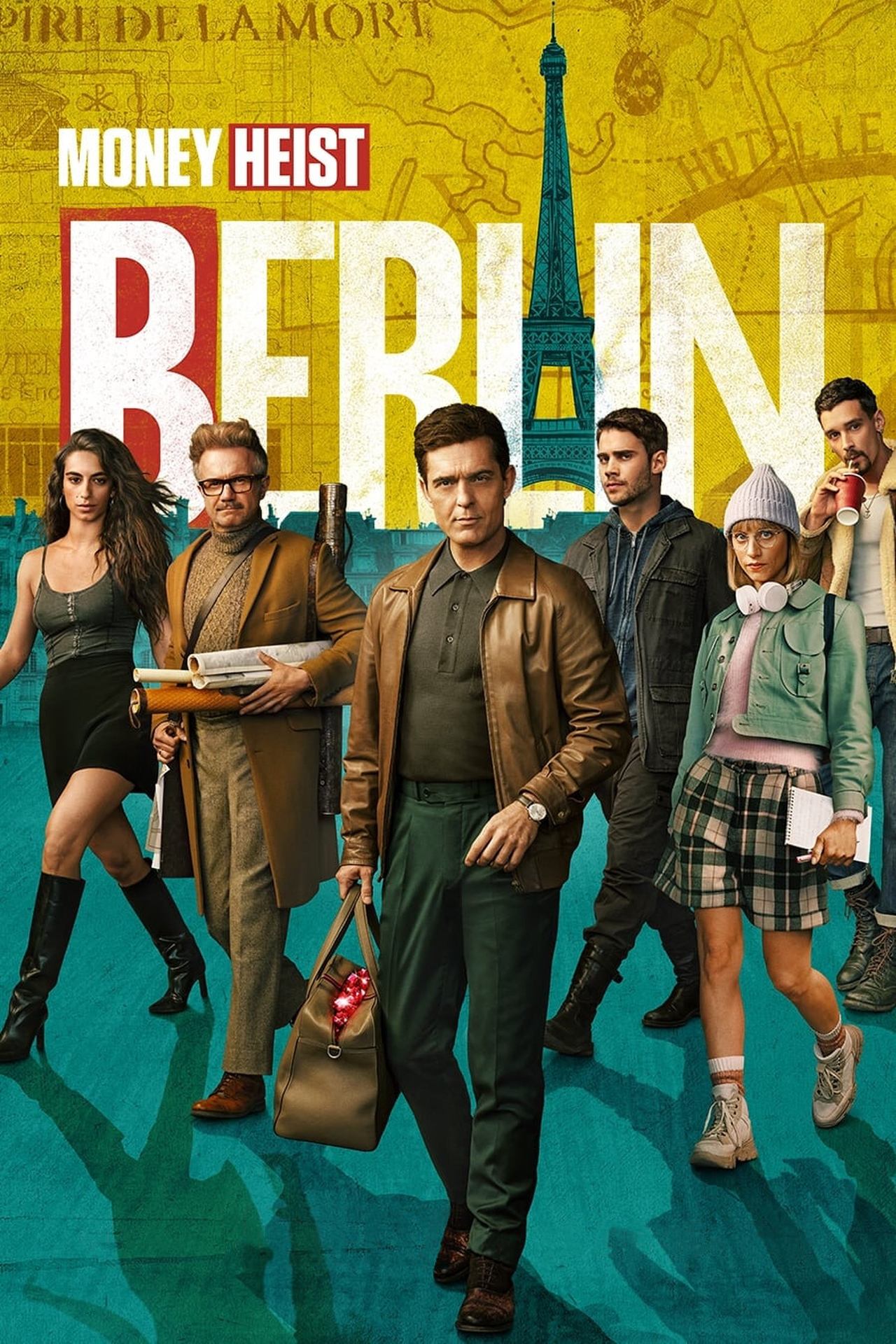
Ending Explained: Berlin
| Title | Berlin |
| Type | Tv |
| Release Date | 2023-12-29 |
| Genres | Drama, Action & Adventure, Crime |
| Studio/Network | Netflix |
| Director/Creator | Creator: Álex Pina, Creator: Esther Martínez Lobato |
| TMDb Rating | 7.5/10 (627 votes) |
| Where to Watch | Netflix, Netflix Standard with Ads |
Berlin‘s ending resolves the Paris jewel heist with a bittersweet separation — Berlin and Camille part ways, the gang scatters with their fortunes, and Damián’s fate hangs in ambiguity. The real theft isn’t the diamonds; it’s the way love robs these characters of their carefully constructed emotional walls.
I didn’t expect a Money Heist spinoff to make me sit in silence after the credits rolled. But there I was, staring at the “Play Next Episode” prompt that would never come, replaying that final image of Andrés de Fonollosa walking away from the one person who genuinely saw him. Álex Pina and Esther Martínez Lobato have built something frustrating, gorgeous, and oddly tender in this Paris-set prequel — a show that uses the mechanics of a heist thriller to tell a story about the impossibility of connection when you’ve built your entire identity around being unreachable.
What Happens at the End of Berlin?
Eight episodes. Forty-four million euros in jewels. One night in Paris that stretches into something far more complicated than any vault. The series tracks Berlin assembling his crew — Keila handling cybersecurity with quiet precision, Bruce bringing raw physical energy, and Damián serving as both logistical mastermind and Berlin’s moral compass — for an auction house heist that should be straightforward. It isn’t.
The complications arrive in the form of Camille Polignac, played by Samantha Siqueiros with a guarded vulnerability that perfectly counters Pedro Alonso’s theatrical charm. She’s married to François, a man whose wealth and connections make him both useful and dangerous. Berlin’s attraction to her isn’t part of the plan. It’s the plan’s undoing.
By the finale, the heist itself works — because of course it does. Berlin always gets the goods. The jewels are secured, the escape routes hold, and the team disperses with their shares. But the emotional architecture of the story collapses in ways that no blueprint could have anticipated. Camille chooses to return to her husband, not out of weakness but out of a clear-eyed understanding that what Berlin offers isn’t sustainability — it’s combustion. Beautiful, brief, and destructive. Damián’s storyline reaches its own quiet devastation, and the gang that felt like family scatters into separate lives, carrying their euros and their bruises.
Breaking Down the Final Scene
That closing image — Berlin alone, walking through Paris after everything — hit differently than I expected. On first watch, I felt the absence acutely. No triumphant group celebration. No slow-motion strut to a pulsing soundtrack. Just a man who got exactly what he planned for and realized the cost only after the invoice arrived.
Pedro Alonso has always understood this character at a cellular level. His Berlin isn’t the sociopath some viewers assumed from Money Heist; he’s a romantic who weaponizes charm because genuine intimacy feels like a vulnerability he can’t afford. The finale strips that armor away. When Camille walks in the opposite direction, Alonso’s face does something remarkable — a micro-expression that flickers between acceptance and devastation before settling on something resembling grace. It’s the kind of acting choice that separates performers from artists.
The parallel editing here deserves mention too. Pina’s direction intercuts Berlin’s solitary exit with the rest of the crew going their separate ways, and the visual grammar is unmistakable: these are people who shared something intense and temporary. The heist created an artificial family, and once the job ended, so did the excuse for closeness. Keila disappears into her new financial freedom. Bruce vanishes into the kind of life he always wanted. Each departure feels both inevitable and painful.
The Camille Decision
Let’s talk about what Camille actually chooses here, because I’ve seen too many interpretations that flatten her decision into “she picked stability over passion.” That reading misses the nuance entirely. Camille doesn’t return to François because she’s afraid. She returns because she recognizes that Berlin’s love, however genuine, comes wrapped in chaos. She’s seen the wreckage he leaves behind. She’s chosen self-preservation over the intoxicating pull of someone who makes her feel alive in ways that also make her feel endangered. That’s not weakness. That’s wisdom most people don’t arrive at until their third heartbreak.
Hidden Details You Might Have Missed
On rewatch, the show plants its emotional thesis early and often. The tagline — “Only two things can brighten a dark day: The first is love. The second is stealing a fortune” — isn’t just marketing copy. It’s the structural argument of every episode. Love and theft operate by the same logic in Pina’s universe: both require vulnerability, both demand you hand something over, and both leave you different than you were before.
Watch the color grading shift as the series progresses. Early episodes bathe Paris in warm amber and gold — romantic, seductive, a city that exists to be fallen in love with. By the final hour, those tones cool into blues and grays. The Paris that felt like a lover becomes a city of departures. It’s subtle enough that you might not notice consciously, but your emotional brain registers the temperature change.
The auction house itself functions as a metaphor most viewers will catch, but the specific way Pina stages the heist within it adds another layer. These characters are stealing objects that only hold value because someone agreed they’re valuable. Sound familiar? It’s the same arbitrary value assignment that governs relationships — we decide someone matters, and suddenly they’re priceless. We decide they don’t, and they become decorative weight.
Also: that recurring musical motif? The one that plays whenever Berlin and Camille share a scene? It fragments in the finale, notes dropping out one by one until silence replaces the melody. Sound design as emotional foreshadowing. Chef’s kiss.
What Does Berlin’s Ending Mean?
Here’s where I’ll probably lose some of you, but I stand by it: Berlin is ultimately a show about the stories we tell ourselves to justify staying alone.
Andrés de Fonollosa has constructed an entire persona around being untouchable. The charm, the plans within plans, the theatrical monologues — all of it serves one function. It keeps people at a distance where they can’t hurt him. The heist isn’t just a job; it’s a performance that allows him to be close to others without ever being vulnerable. As long as everyone’s focused on the score, nobody’s asking the questions Berlin can’t answer.
Camille breaks that system. She sees through the performance because she’s running her own. Their connection is real precisely because both of them are faking something, and both of them know it. When she leaves, she’s not rejecting Berlin — she’s rejecting the terms under which their relationship could exist. She wants something whole. He can only offer something stolen.
Damián’s arc reinforces this reading. Tristán Ulloa plays him as a man who chose intellectual distance over emotional risk, and his ending suggests that even brilliant people can outsmart themselves into loneliness. The professor who understands human behavior theoretically but can’t navigate it personally — it’s a character type as old as literature, but Ulloa finds fresh sadness in it.
The gang’s dissolution in the finale isn’t failure. It’s the natural conclusion of a temporary alliance. Berlin wanted the heist to mean more than it did, wanted the crew to become family, but you can’t force permanence onto something built for a single night. The 44 million euros they steal will last. The connections won’t. That asymmetry is the show’s quietest and most devastating observation.
Fan Theories Worth Considering
Camille Will Return in a Future Season
This one circulates widely, and I find it plausible if not confirmed. The chemistry between Siqueiros and Alonso is too potent to waste on a single season, and the deliberate openness of Camille’s departure feels like narrative real estate being banked for later. That said, I’d argue her return would diminish the ending’s power. Sometimes the most respectful thing a story can do is let a character’s choice stand without revision.
Damián Is the Narrator of Berlin’s Story
Some viewers have noticed that Damián’s perspective feels distinct from the others — more observational, more reflective. The theory suggests he’s the one preserving this narrative for posterity, which would reframe the entire series as a eulogy rather than a chronicle. I love this reading, even if the text doesn’t fully support it. It adds a layer of mournful intentionality to every scene he shares with Berlin.
Berlin Knows He’s Running Out of Time
The most compelling theory for me: Berlin’s urgency isn’t just personality — it’s mortality. Fans of Money Heist know his fate, and the prequel’s emotional weight deepens if you read his hunger for connection as a man who senses his story will be cut short. Every romance feels more desperate. Every heist feels more like a bid for meaning. Whether Pina intended this or not, the intertextual knowledge transforms Berlin from a charming rogue into someone desperately trying to cram a lifetime into a few stolen nights.
📰 More From Watchlist Wizard
Frequently Asked Questions
Is Berlin season 2 coming out?
Netflix hasn’t officially confirmed a second season as of early 2025. However, the show’s strong performance — a 7.5/10 on TMDb and significant viewership upon its December 2023 release — makes renewal likely. The creative team has expressed interest in continuing Berlin’s story, and the open-ended finale certainly leaves narrative room.
Is the Berlin series related to Money Heist?
Yes, directly. Berlin is a spinoff prequel to Money Heist (La Casa de Papel), created by the same team — Álex Pina and Esther Martínez Lobato. Pedro Alonso reprises his role as Andrés de Fonollosa, exploring the character’s life before the Royal Mint heist. You can watch Berlin without having seen Money Heist, but the emotional resonance deepens considerably if you know where this character’s journey ultimately leads.
Is Berlin Netflix worth watching?
If you enjoyed Money Heist’s blend of tension and character-driven drama, absolutely. Berlin trades the claustrophobic pressure of the original series for something more romantic and melancholic. The Paris setting gives it visual distinction, and Alonso’s performance remains magnetic. It’s not as revolutionary as Money Heist felt in 2017, but it doesn’t need to be. It’s a confident, stylish character study that earns its emotional payoff.
Is season 2 of Berlin out?
No. As of now, only the first season — released December 29, 2023, on Netflix — is available. Any claims about a second season’s release date remain speculative until Netflix makes an official announcement.
The best heist stories understand something fundamental: the real score isn’t in the vault. It’s in the space between people who convince themselves that stealing together is the same as belonging together. Berlin knows this, leans into it, and walks away from the rendezvous point with pockets full of diamonds and an emptiness no fortune can fill. That’s not a flaw in the plan. That’s the plan working exactly as life intended.
Ready to watch Berlin?
Check out our complete streaming guide to find out where you can watch it right now.